Betta Breeding: Are You Ready for a Multi-Month Commitment?
Written by Diamond Dave — October 3, 2026
A realistic look at the labor, space, and care needed before you even think about fry.
The newsletter for dedicated freshwater keepers who want to understand if they are truly ready for advanced pet ownership.
Let’s be straight: This is not a weekend project.
I see this all the time with folks who come into my shop. They see a beautiful pair of Bettas and think, “I’ll just put them together and see what happens.” Here is the reality from someone who has spent years managing these fish: breeding isn’t an afternoon hobby or a weekend project; it’s a multi-month commitment that demands your attention every single day. You aren’t just raising one pair of fish; you are potentially creating dozens, if not hundreds, of tiny lives that need specific care at different stages of growth. If you aren’t prepared to spend the next three months checking water parameters, managing specialized feeding schedules, and keeping multiple containers clean, it is much better to just enjoy your Betta as a high-quality pet in its own established tank. It’s okay to choose not to breed—most people shouldn’t start until they have their systems dialed in perfectly.
The setup—more than just two tanks.

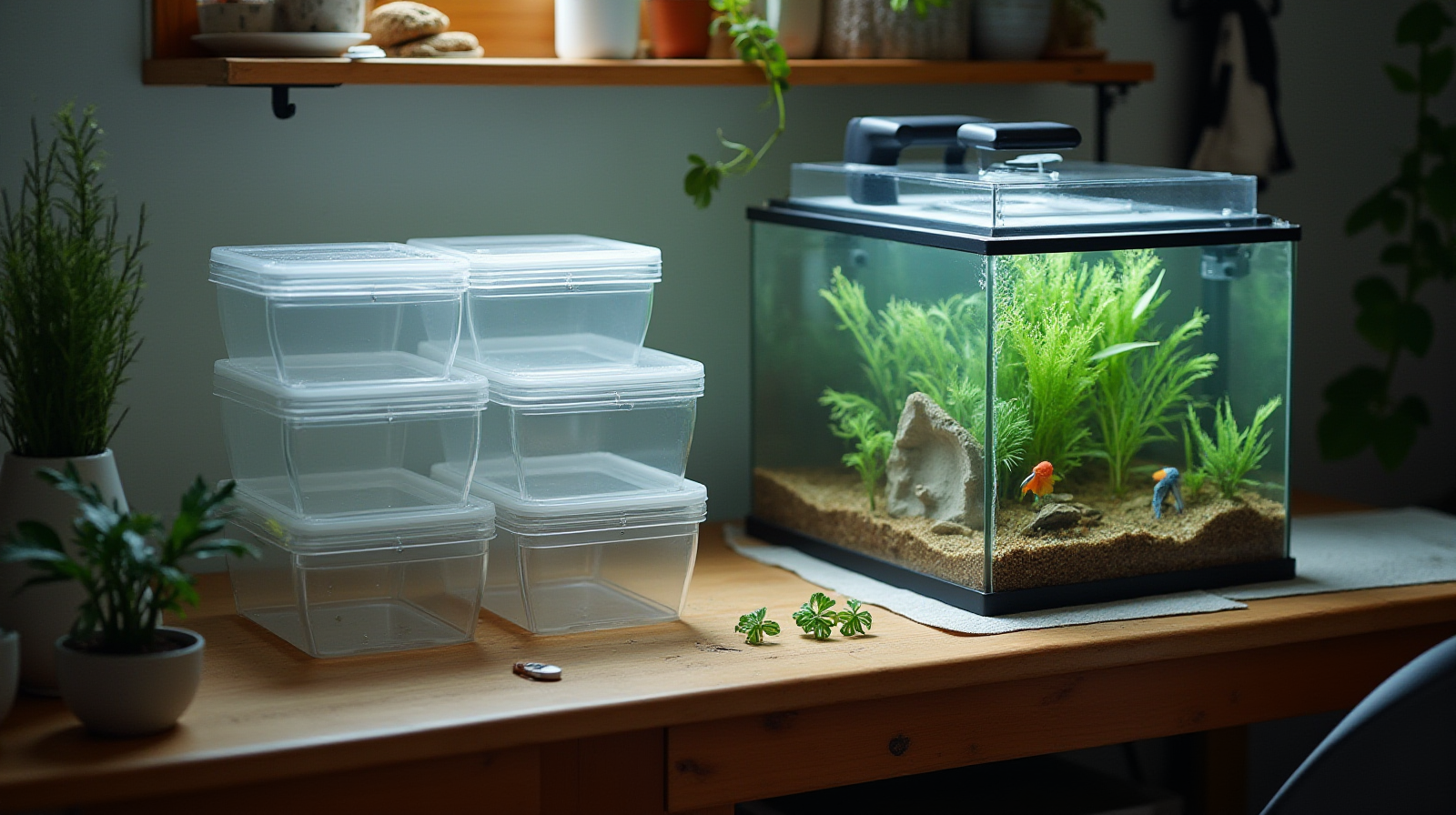
One of the biggest misconceptions I see is that you only need one big tank for breeding. If you try to do everything in one container, you’re going to run into serious issues with water quality and stress. To do this right without losing your fry or stressing out the parents, you need a modular system. You need space for:
- Conditioning: A dedicated area to get the pair healthy and ready.
- Spawning: A controlled environment where they can focus on breeding without outside distractions.
- Fry Rearing: Small, separate containers (often called “hatcheries”) where the babies can grow safely away from the adults.
By separating these stages, you prevent cross-contamination and ensure that if one tank has a spike in ammonia or nitrites, it doesn’t wipe out your entire brood. You need to have the physical space for multiple small containers before you even introduce the first fish to each other. It’s about creating a flow where the fish move from one “station” to the next as they grow.
What actually goes into a breeding cycle?
The process is much more involved than just putting two fish together and waiting for bubbles. It starts weeks before the actual spawning with conditioning—adjusting their diet to ensure they are healthy enough to produce high-quality offspring. Once you move into the breeding phase, your role changes to constant monitoring of water chemistry and temperature stability.
After the eggs hatch (which happens quickly), the “fry” stage begins. This is where the real work starts. You have to manage a specific feeding schedule for tiny fish that are often too small to see clearly with the naked eye. They need microscopic food, not just standard flakes or pellets. You’ll be performing frequent water changes in their rearing tanks because even a small amount of waste from dozens of fry can foul a small container very quickly. Each stage requires a different focus: nutrition during conditioning, stability during spawning, and intensive care during the first few weeks of fry life.
The mistake most people make.
The biggest mistake I see—and it’s one you can avoid if you plan ahead—is failing to account for the “aftermath.” Many people get excited by the sight of tiny swimming fry and don’t think about what happens in three months when those fish are full-grown. You cannot keep dozens of Bettas in a single tank; they will become stressed, aggressive, and eventually die from poor water quality.
Common errors include overcrowding these “graduates” into one large tank or trying to house them with other species without enough space. Another common mistake is neglecting the maintenance of the fry tanks. Because those containers are small, they can go out of spec very quickly. If you don’t have a plan for where every single fish will live once it’s big enough to survive on its own, you shouldn’t start the breeding process yet. Success isn’t just getting them to hatch; it’s ensuring they all have a home after they grow up.
Keeping it manageable: The commitment breakdown.
To keep your sanity and the health of the fish intact, think of the timeline in blocks rather than days.
- Month 1: Focus is on conditioning and preparation. You are checking equipment and getting your “stations” ready.
- Month 2: This is the high-intensity phase. You are managing the spawning process and the first few weeks of fry life where they need frequent feeding and water checks.
- Month 3+: The transition period. You are sorting, sizing, and moving older fry into their own permanent homes or larger holding tanks.
Even if you only want to breed a small amount, each stage requires daily attention. If you have a week-long vacation coming up or your schedule is too hectic to check on them every day for several months, it’s better to wait. Consistency is the most important factor in keeping these fish alive and healthy during their most vulnerable stages.
If you’re looking to get started but aren’t sure how to organize your space, our Guide Library has some great resources on setting up proper nursery systems. You can also check out the “Aquarium Wizard” for specific advice on water chemistry for fry rearing.
Source: AquaticRig
Get new newsletter issues, guides, and product updates by email.