
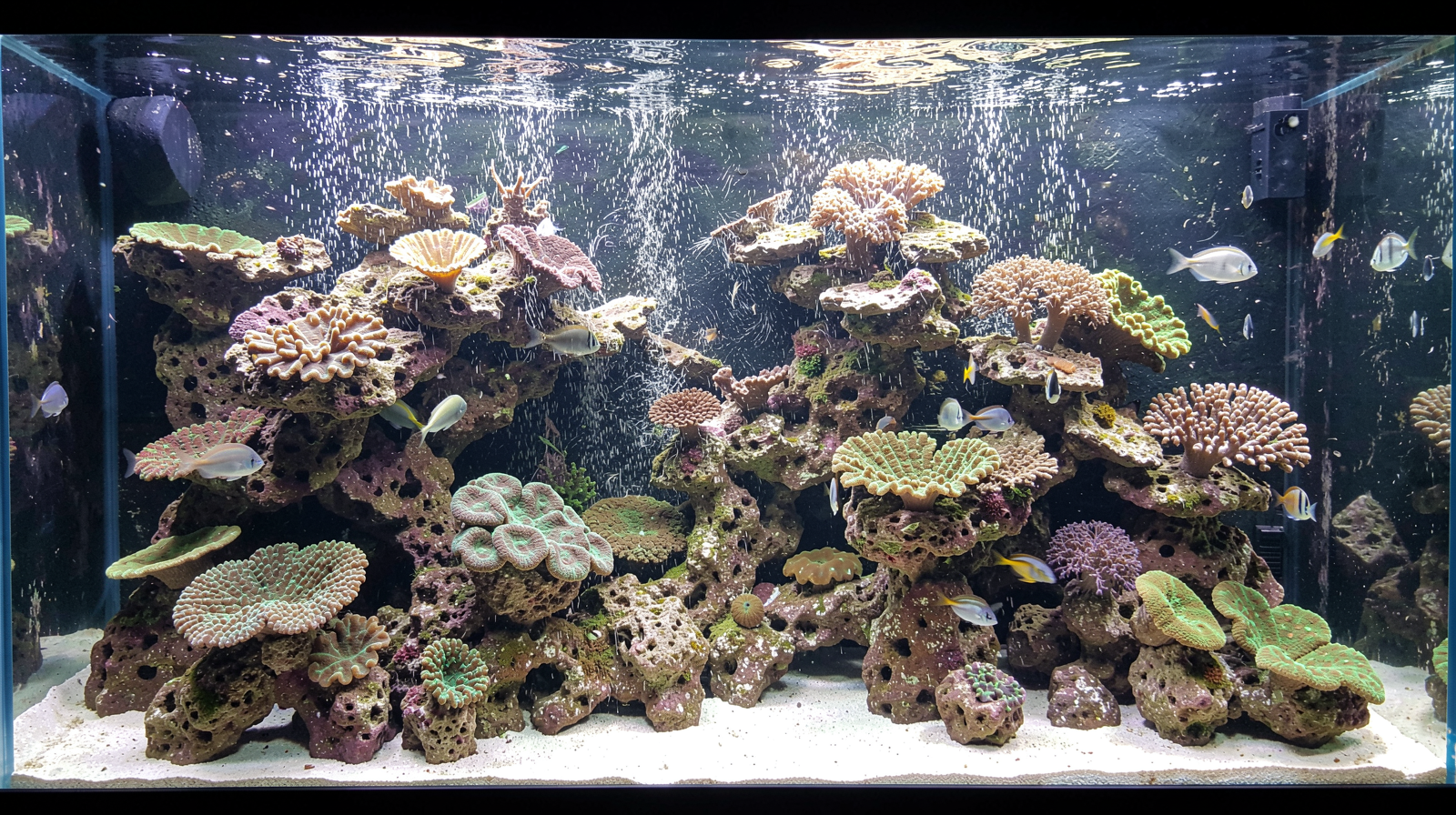
Getting Reef Flow Right: Picking and Placing Powerheads
Written by Diamond Dave — October 23, 2026
A deep dive into turnover rates so your corals actually thrive instead of just surviving.
The newsletter for intermediate reef keepers who want fewer dead corals and less guesswork in their flow setup.
Before we talk pumps: What exactly is good reef flow?
When people first start keeping corals, they often think “flow” just means making the water move so it looks like a scene from a nature documentary. While that’s part of it, the real reason we care about movement is chemistry and biology. In a stagnant tank, nutrients get trapped in one spot, and waste products—like fish poop or leftover food—sit there and rot. That leads to algae blooms and localized spikes in nitrates or phosphates.
Good reef flow is about circulation. You want the water to act like a conveyor belt, constantly bringing fresh, oxygenated water over every surface and carrying away what the inhabitants don’t need. For corals specifically, movement helps them “feed” by keeping microscopic particles suspended in the water column rather than letting them sink to the bottom. If your tank looks like a still pond, your corals are likely struggling to stay healthy because they’re essentially living in their own waste.
Understanding turnover rates (and how big a number you actually need)

You’ll see people throw around “turnover rates” like it’s a magic number, but I find it helps to think of it as the volume of water your pump can push through in an hour compared to the total size of your tank. If you have a 50-gallon tank and a pump that moves 50 gallons per hour, you’re turning over the whole tank once every hour. For a basic fish-only setup, that might be plenty. But for a reef with corals, you usually need much more movement than that to ensure there are no “dead zones” where water sits still.
There isn’t one perfect number because your layout matters as much as the pump strength. A lot of heavy rockwork can block flow, requiring a higher turnover rate to get around those obstacles. Instead of obsessing over a specific gallon-per-hour rating on a box, ask yourself if you can see movement in every corner of the tank. If there’s a spot where the sand isn’t shifting or debris is piling up, your turnover rate is too low for that area.
Propeller vs. Gyre: Picking your pump type for the job
Not all pumps are built the same way, and choosing the wrong style can make it hard to get the flow you want. Most standard powerheads use a propeller (impeller) design. These are great for creating a focused, directional stream of water. They’re easy to aim at a specific coral colony that needs a bit of extra “push.” However, they can sometimes create a very linear current that doesn’t reach the back corners of the tank effectively.
Gyres, on the other hand, are designed to move large volumes of water in a circular motion. They’re excellent for creating a general “bulk” flow across the whole reef. In my experience, most successful setups use a mix of both. You might use a gyre to keep the overall water moving and then place smaller powerheads to provide targeted flow for specific high-demand corals. It’s about layering your movement rather than trying to do everything with one massive pump.
Placement Matters More Than Horsepower (Sometimes)
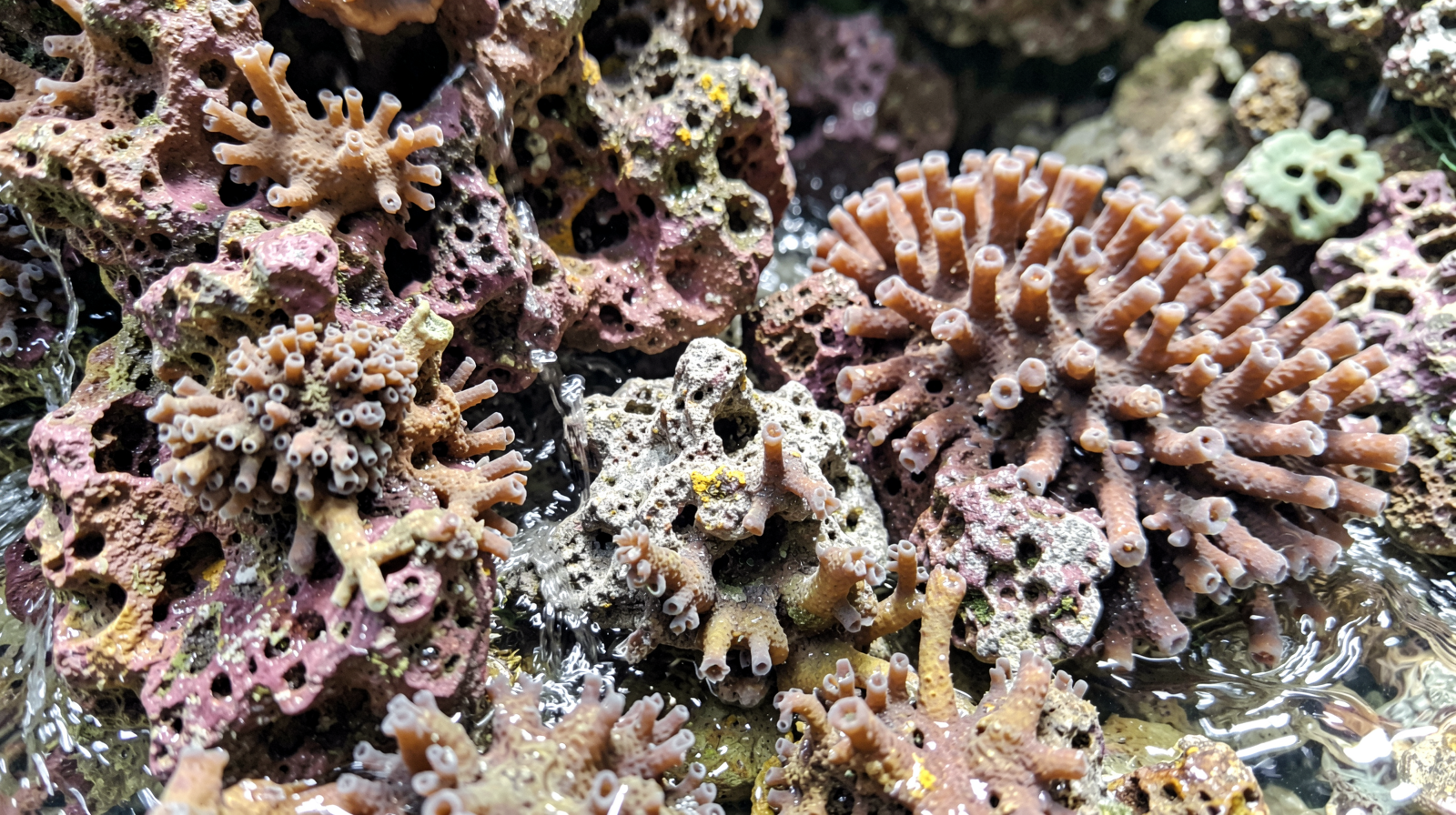
I’ve seen people buy the most expensive, high-horsepower pumps on the market only to have their corals look sickly because the pump was pointed at a rock wall instead of the reef. A powerful pump in the wrong spot just creates a “dead zone” behind it and a “hurricane zone” in front of it. You want to place your pumps so that they work with your rockwork, not against it.
Think about where you want the water to go. If you have a large piece of live rock in the middle of the tank, placing a pump directly behind it might just create a lot of turbulence and noise without actually moving water across the rest of the reef. You want to aim for “laminar” flow—smooth, consistent movement—where possible. The goal is to get the water to dance around your corals in a way that mimics the ocean’s natural surge, not just blasting it at them from one direction.
Common flow mistakes I see people make in my tanks
One of the most common mistakes I see beginners make is over-filtering their intake. If you put a powerful pump too close to an intake pipe or a filter, it can create a vacuum effect that makes it hard for the pump to pull water effectively, often resulting in less flow than you’d expect from the specs on the box. Another big one is creating “dead zones.” This usually happens when people only have one pump and it’s positioned in a way that creates a circular loop in just one corner of the tank while the rest of the water stays still.
I also see folks over-powering their small tanks. If you have a 20-gallon nano reef and you put in a pump meant for a 150-gallon system, you’re going to stress out your fish and potentially blow sand everywhere. It’s always better to start with slightly less flow and add more as you see where the “still” spots are. You can’t easily turn down the power of a pump once it’s already too strong for the space.
A quick checklist before you buy anything new
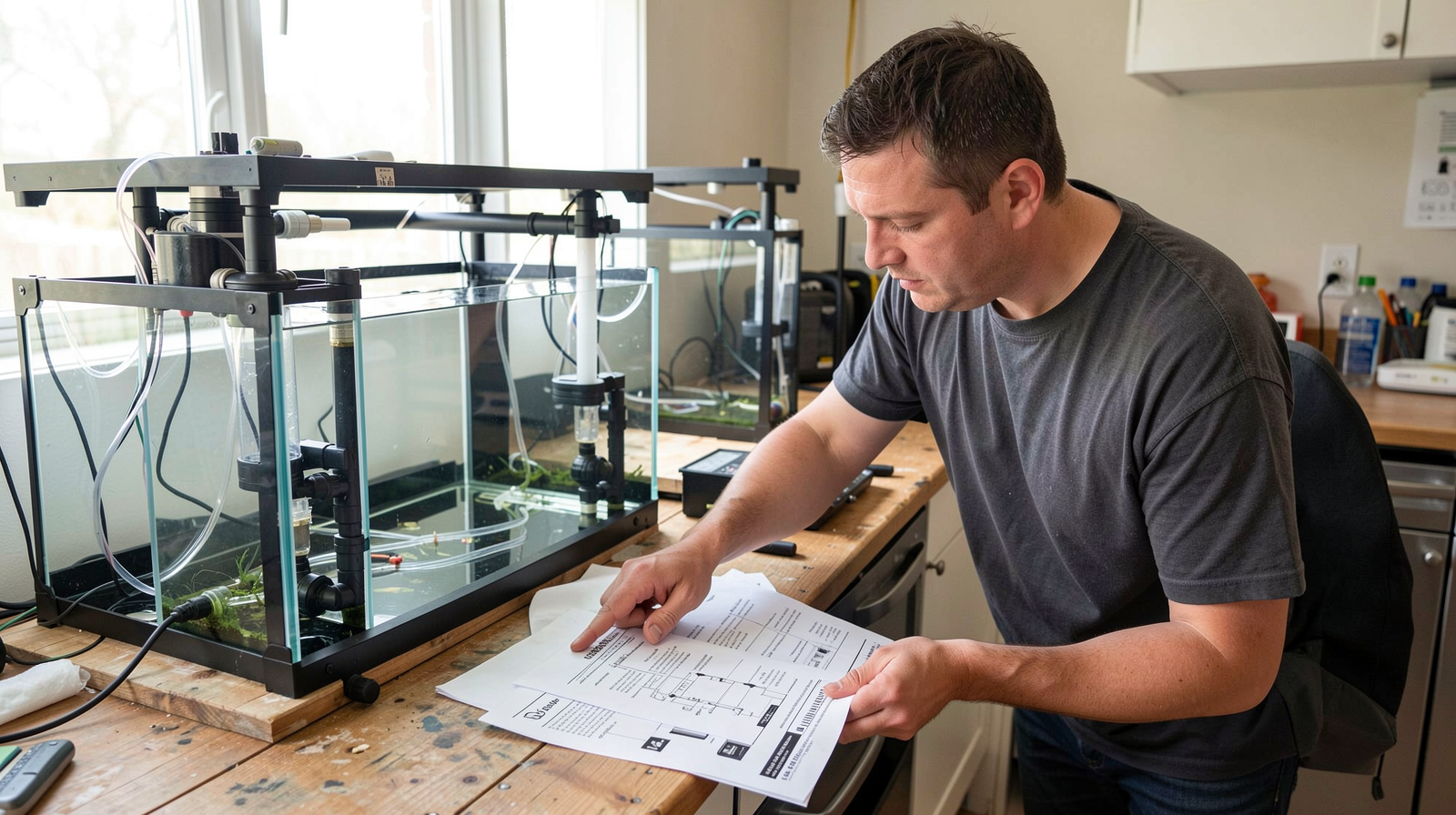
Before you head out to grab another piece of gear, take a walk around your tank and do a little bit of “flow auditing.” It’ll save you some money and frustration if you can identify exactly what’s missing before you start spending. Here is what I look for:
- The Sand Test: Is the sand shifting slightly in all areas of the tank, or are there piles building up in certain spots?
- Debris Check: Are there spots where fish waste or uneaten food consistently settles on the bottom? (These are your dead zones).
- Coral Movement: Are your corals swaying gently, or are they completely still and “tucked” into the rock?
- Current Path: Can you trace a path of water from one side of the tank to the other without it getting blocked by heavy rockwork?
If you can answer “no” to any of these, that’s where your next pump needs to go. Knowing exactly what problem you’re trying to solve will help you pick the right tool for the job.
Source: AquaticRig
Get new newsletter issues, guides, and product updates by email.