
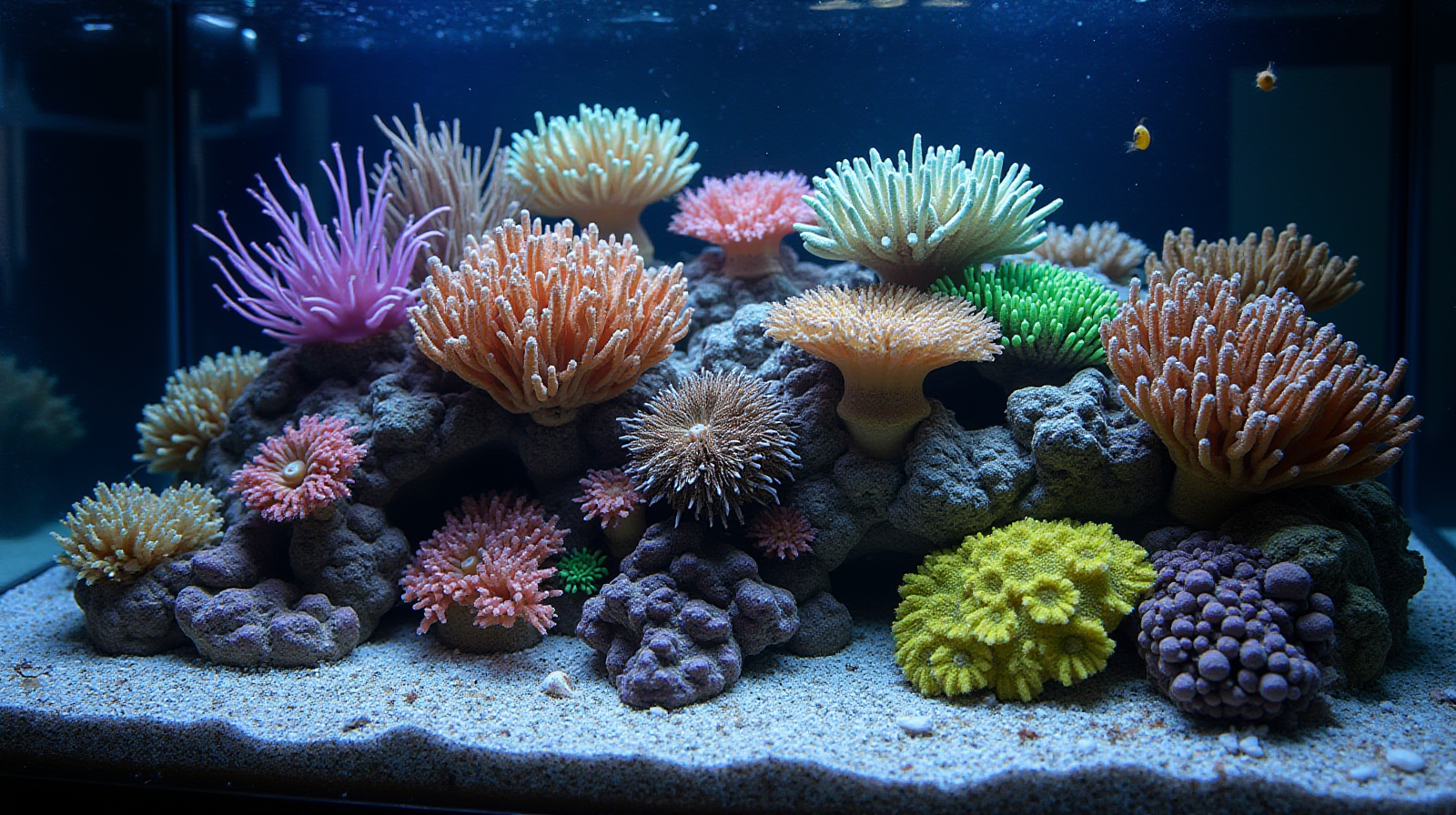
Live vs. Dehydrated: What's Actually Good for Your Corals?
Written by Diamond Dave — October 21, 2026
A deep dive into feeding sources so you stop guessing about your reef nutrition.
The newsletter for experienced reef keepers who want to dial in their livestock diet past the surface level stuff.
Before we dive in: Why feeding sources actually matter
When I first started keeping corals, I used to think of “feeding” as just making sure my colonies didn’t starve—a simple task of tossing some food into the water and hoping for the best. But after a few years of watching what works and what causes algae blooms or stunted growth, I’ve learned that it isn’t just about calories. For corals, feeding is about bioavailability. Just because something is in the water doesn’t mean the coral can actually grab onto it and use it to build tissue. Different food sources provide different types of nutrients; some are great for building calcium carbonate skeletons, while others contain the trace elements that give a polyp its vibrant color. When we talk about live versus dehydrated food, we aren’t just debating “freshness.” We are talking about how much of those specific nutrients survive the process and whether they stay in a size that your corals can actually catch before it breaks down into waste for the algae to eat first.
The live food argument (and its real-world limits)
There is a lot of talk in the reef community about “live” foods like mysis shrimp or blackworms being the gold standard. There’s some truth to this; these organisms are complex and often contain high levels of lipids and proteins that stay intact because they haven’t been processed. In my own tanks, I’ve seen corals respond well to live feeder items when available. However, there is a practical side to this that people don’t always mention over the fence. Keeping your own culture of live food is a massive time commitment—it’s essentially running a second aquarium just for the “snacks.” Furthermore, what looks like one large shrimp to us might be an overwhelming amount of nutrients for a small tank if it isn’t handled correctly. Live foods are great, but they aren’t always convenient or easy to dose consistently every few days. For most home hobbyists, relying solely on live food can lead to inconsistent feeding schedules, which is often more of a problem than the lack of “freshness” in other options.
Dehydrated stuff: How far back does modern science take us?
Don’t let the word “dehydrated” make you think it’s a low-quality fallback. Modern processing has gotten much better at preserving what matters. While some heat or pressure can break down certain delicate proteins, many high-quality dry foods are engineered to be stable and nutrient-dense. The main difference between these and live food is the consistency of the particle size. With a piece of live shrimp, you’re getting a huge chunk that might take days to break down; with modern dehydrated micro-particles, you’re providing something much more uniform. I like to think of it as the difference between a steak dinner (live) and a high-quality multivitamin (dehydrated). Both have their place. Dehydrated foods are often easier to dose precisely into small portions, which helps keep your nutrient levels stable throughout the week rather than having one “big” feeding day followed by several days of nothing.
Microscope talk for the non-scientist
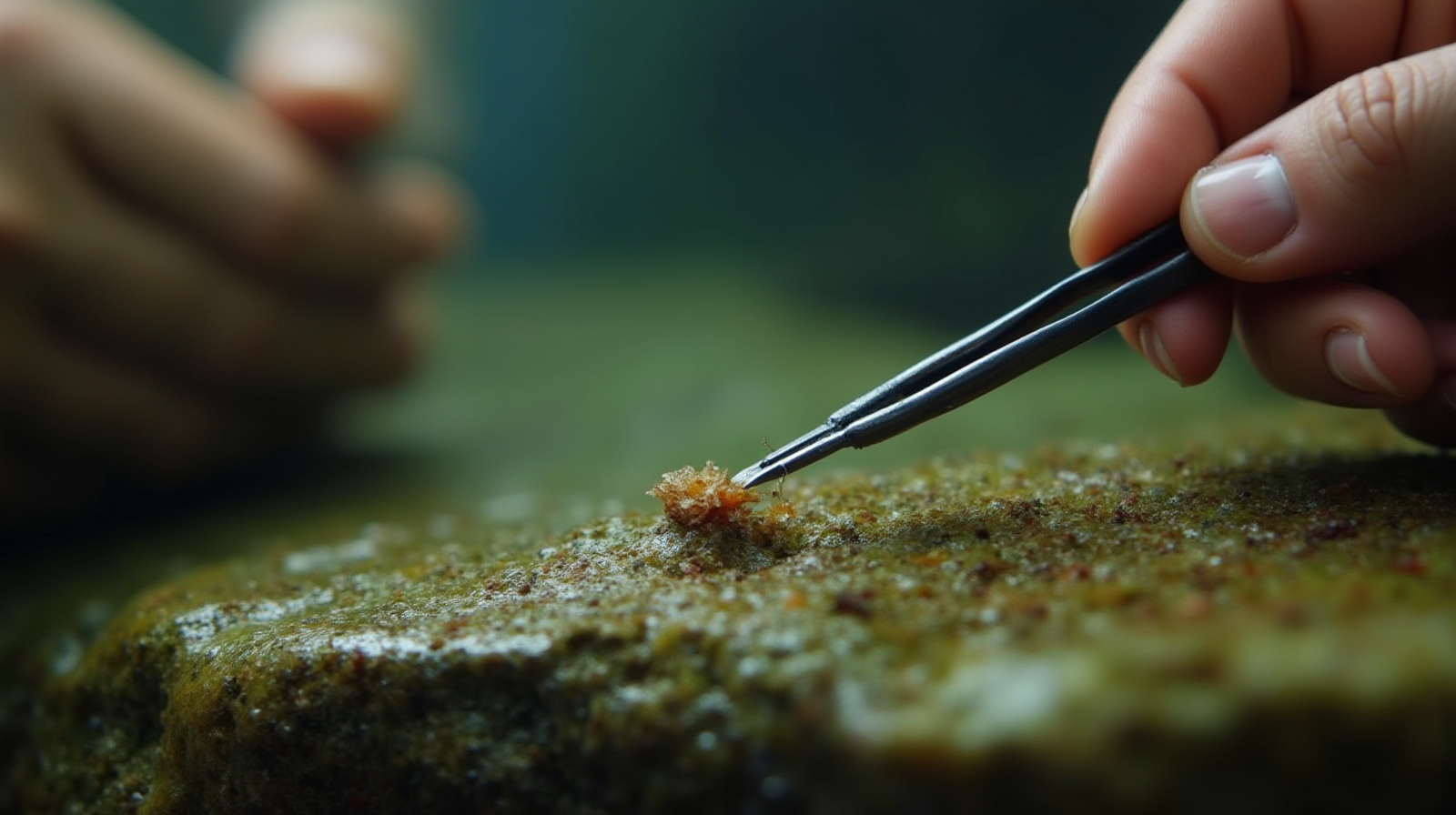
You don’t need a lab coat or a PhD to understand why size matters in coral food. If you were to look at different feed types under a microscope, you’d see that “small” is relative. A piece of live worm might be huge compared to a speck of dust. For many corals and small invertebrates like copepods, if the food particle is too large, they can’t grab it before it falls into the sand or gets eaten by bacteria. This is where the science of microscopic analysis actually helps us as hobbyists—it helps us understand that “dehydrated” doesn’t mean “bad,” it just means the size and distribution are different. When you look at a high-quality powdered feed under magnification, you see tiny, consistent grains. These are often much easier for smaller organisms to find and consume than large chunks of live food that might only be accessible to larger fish or scavengers.
| Feed Type | Primary Benefit | Common Drawbacks | Best Used For |
|---|---|---|---|
| Live | High lipid/protein content; complex nutrients | Hard to dose precisely; requires storage space | Large colonies, occasional “treats” |
| Frozen | Good balance of nutrition and ease | Requires thawing; some nutrient loss during freezing | Regular feeding cycles |
| Dehydrated | Highly consistent; easy to portion/store | Potential for less complex nutrients in lower-end brands | Daily maintenanceed portions, small tanks |
Putting it together: Building a sustainable mix
The best way to approach this isn’t by picking a “side,” but by building a strategy that works for your specific tank and your lifestyle. I’ve found the most success by using a hybrid method. For example, you might use high-quality dehydrated micro-particles as your daily “staple” because it’s easy to dose a small amount every other day without making a mess. Then, once or twice a month, you can introduce a live feeder—like a mysis shrimp—to provide those more complex lipids and proteins that are harder to replicate in powdered forms. This way, your corals get the consistent nutrition they need from the dehydrated source, but also benefit from the “high-quality” feast of live food occasionally. It takes the pressure off you to have a perfect live-food setup every day while ensuring your reef isn’t just getting one type of nutrient profile all the time.
What to watch out for when you start mixing feeds
When you begin incorporating different types of feed, the biggest risk is “over-feeding” because you think you need to make up for a lack of something. If you add a live feeder and it doesn’t get eaten by your fish or corals within a few minutes, it’s likely going to rot and cause a spike in nitrates and phosphates. This can lead to algae blooms or even stress the invertebrates in your bottom beds. You should also watch for signs of “dirty” feeding—if you notice your water turning cloudy after adding live food, you might need to switch to a smaller piece or more frequent, smaller doses. Another tip is to keep an eye on your local populations; if you see an explosion of nuisance algae after starting a new feed type, it’s usually a sign that the portions are too large for the tank’s capacity. Consistency in volume is just as important as variety in source.
Source: Reefs.com
Get new newsletter issues, guides, and product updates by email.