Soil or Gravel? Picking a Substrate for Your New Planted Tank
Written by Diamond Dave — September 17, 2026
A practical guide to figuring out what your aquarium bottom really needs.
The newsletter for new and intermediate planted tank keepers who want roots that thrive without mystery chemical reactions.
Why does the bottom layer even matter?
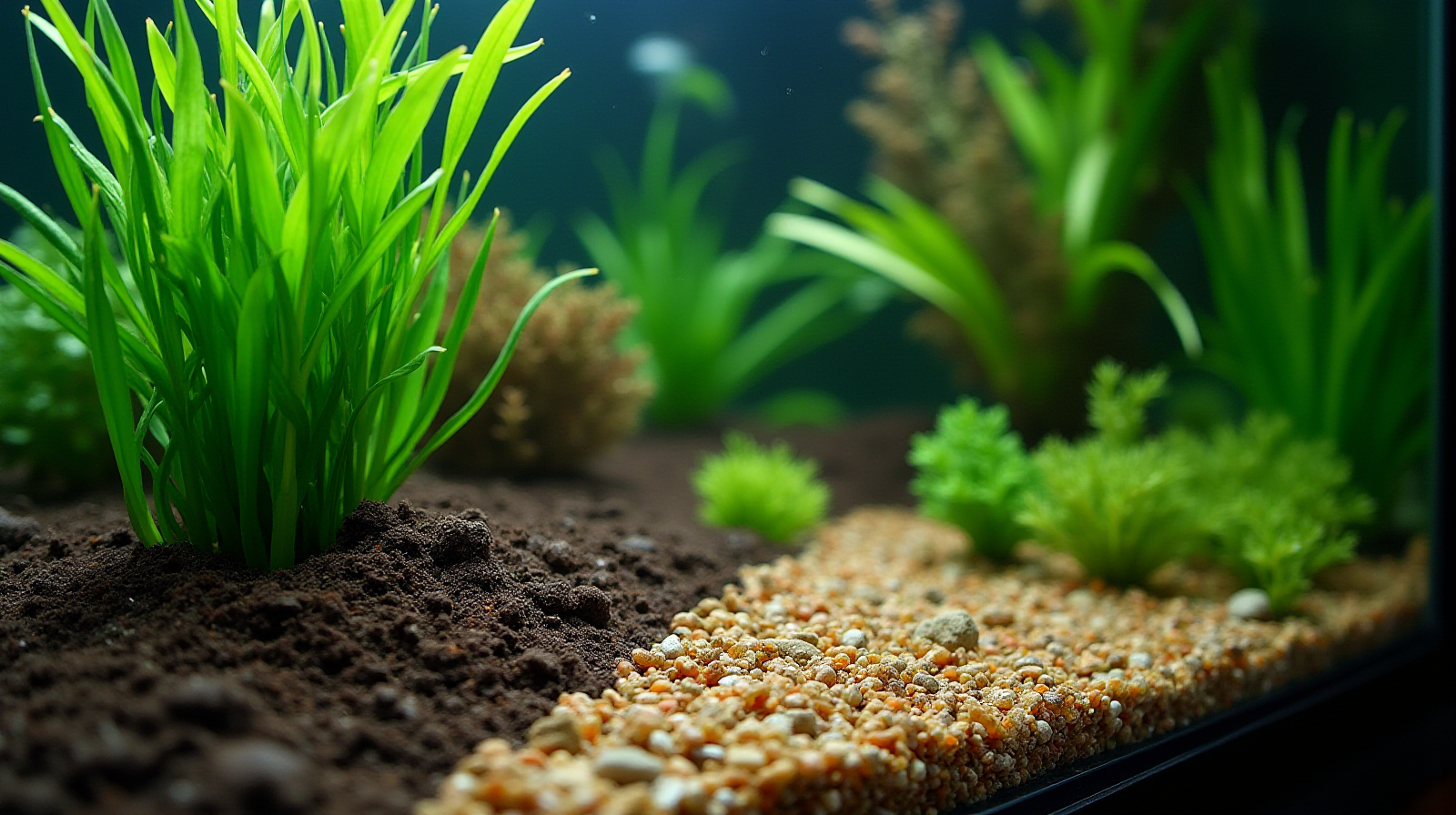
When I first started out, I honestly thought substrate was just something to put on the floor so my fish wouldn’t see a big empty void at the bottom of the glass. It’s easy to view it as purely aesthetic—just some rocks or sand to make the scene look complete. But in a planted tank, the “floor” is actually one of the most important parts of your ecosystem. Think of it as the foundation of the house. For many aquatic plants, the roots aren’t just hanging in water; they are actively searching for nutrients and minerals. A good substrate acts as a biological anchor where beneficial bacteria can take hold. Depending on what you choose, that bottom layer can either be a source of food for your plants or just a stable home for their root systems to grip onto while they pull nutrients from the water column.
The two main camps: Active vs. Inert
In this hobby, we generally talk about “active” and “inert” substrates. These terms might sound like marketing jargon, but there is a very practical distinction between them. An active substrate—usually something like specialized aquatic soil—is designed to slowly release nutrients (like iron, potassium, and micronutrients) into the root zone over time. It often has a different pH profile than standard water. On the other hand, an inert substrate is exactly what it sounds like: chemically inactive. This includes things like river sand, gravel, or crushed lava rock. These materials don’t “feed” your plants directly; they just provide physical structure and surface area for bacteria to live on. Neither choice is “wrong,” but they serve different goals. Active substrates are built for heavy feeders, while inert substrates offer stability and simplicity because they won’t swing your water chemistry around as much.
When to use the fancy stuff (and when not to)
Choosing between these two usually comes down to what kind of plants you want to keep in your tank. If you are planning on growing heavy-feeding species—think Amazon Swords, Cryptocoryne varieties, or dense carpets of grass—an active soil can make those plants much easier to maintain because the nutrients are right where they need them. However, there is a trade-off. Active soils can sometimes lead to algae issues if you aren’t careful with your lighting and fertilization plan. If you are starting out with “low-tech” goals—meaning you want easy-going plants that don’t require constant dosing of fertilizers or high levels of CO2—a high-quality inert substrate like a smooth sand or small gravel is often the smarter, more stable choice. It removes one variable from your equation while still giving your plants a solid place to grow.
The ‘Middle Ground’ approach: Layering and mixing
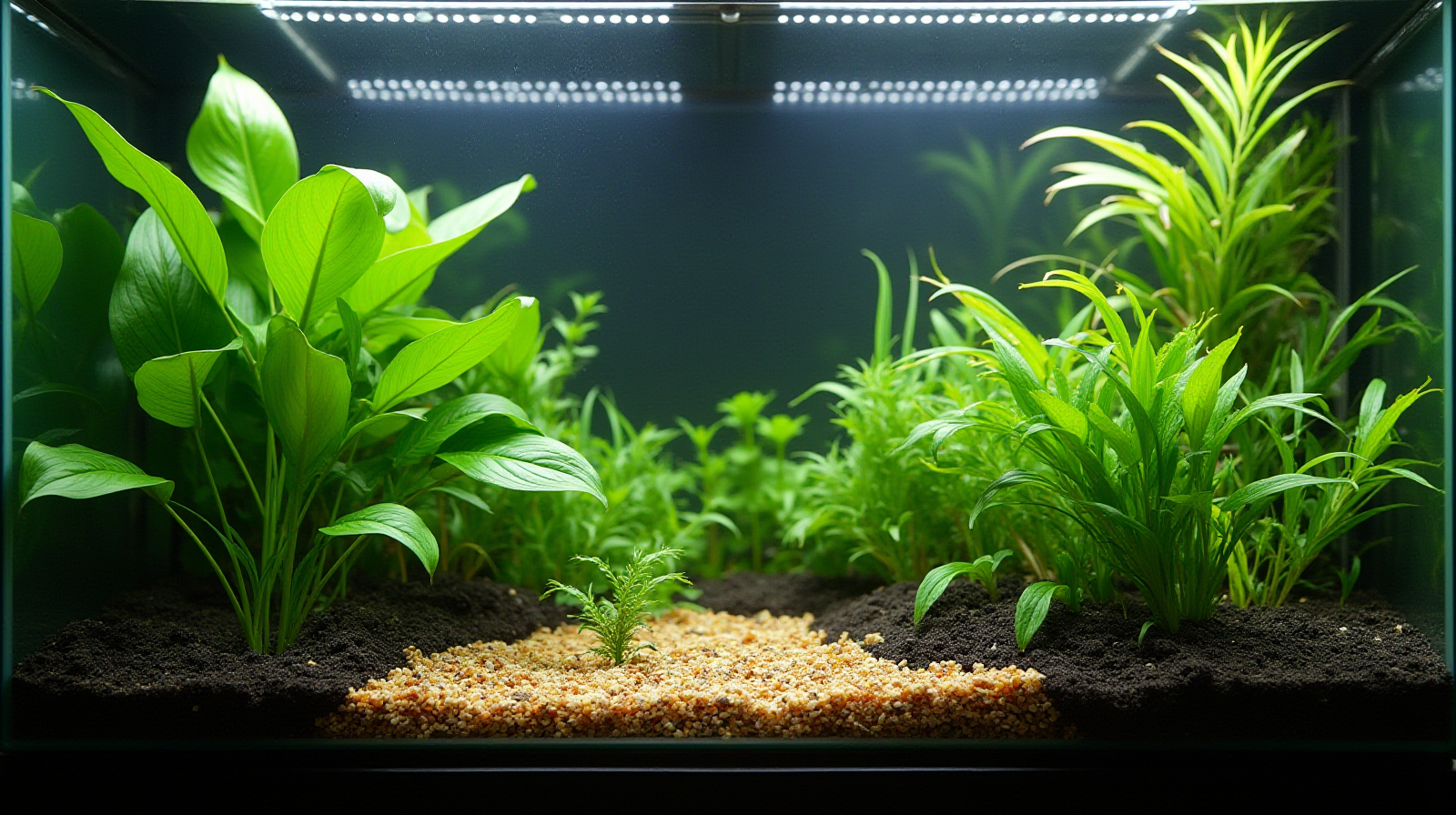
A lot of people end up in a spot where they want the nutrient boost of an active soil but worry about it making their water chemistry too unstable or messy. This is where I often recommend “capping.” In this setup, you lay down a layer of active aquatic soil at the bottom to feed your heavy-growing plants, and then you cover that entire layer with 1–2 inches of inert sand or fine gravel. The cap acts as a buffer; it keeps the “messy” chemistry of the soil contained while still allowing the roots to reach down into the nutrient zone. This is a very common way to get the best of both worlds without having to micro-manage your water parameters every single day. It gives you more wiggle room if you’re still learning the ropes of balancing your tank’s chemistry.
A quick decision tree for your setup
If you aren’t sure which path to take, it helps to look at your goals before you buy a bag of anything. Ask yourself what kind of “vibe” and maintenance level you are aiming for with this specific tank. Use the following breakdown to help decide:
| If your goal is… | And your experience is… | Then consider… |
|---|---|---|
| Low Maintenance / Beginner Friendly | Just starting out | An inert substrate (Sand or Gravel) |
| High Growth / Tropical Variety | Comfortable with some dosing | Active Aquatic Soil |
| The “Best of Both” Hybrid | Willing to do a bit more setup | Layered approach (Soil capped with Sand) |
Essentially, if you want the simplest path possible, go inert. If you want to grow demanding plants and don’t mind a slightly more complex management style, look into active options or a layered system. Your choice should ultimately depend on how much “work” you want to do behind the scenes to keep those plants looking green.
Source: AquaticRig
Get new newsletter issues, guides, and product updates by email.