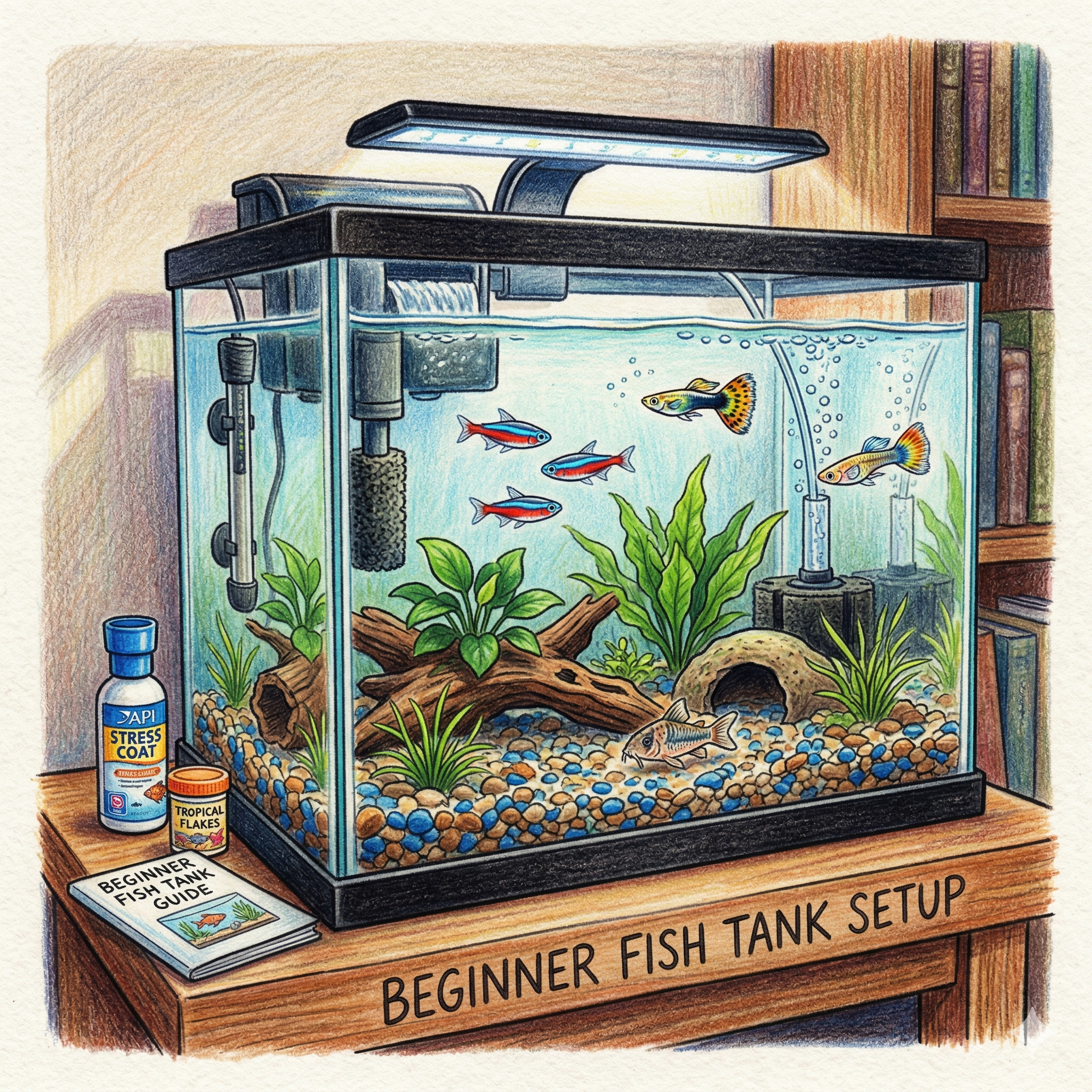
Complete Beginner Tank Setup Guide 2026
Starting your first aquarium can feel overwhelming. Too many decisions hit at once: tank size, filter, heater, cycling, fish, and maintenance. Many beginners buy everything in one trip, set it up fast, and watch the tank struggle within weeks.
I made those exact mistakes with my early tanks in Norman, Oklahoma. My first 5-gallon setup looked beautiful for a weekend but became a daily chore and eventually cost me fish. The good news? A successful first tank is very achievable when you follow the right order and prioritize stability over speed.
This updated 2026 guide walks you through the complete process for a reliable home or small-office freshwater aquarium.
Last updated May 2026 with current equipment recommendations and real-world pricing.
Beginner Tank Setup at a Glance
| Step | What You Do | Why It Matters | Time Needed |
|---|---|---|---|
| 1 | Choose tank size & location | Prevents weight, space, and regret issues | 1–2 days planning |
| 2 | Buy core equipment | Keeps setup simple and effective | Shopping day |
| 3 | Add substrate, decor & water | Builds the foundation correctly | 1–2 hours |
| 4 | Install & test equipment | Ensures everything works safely | 30–60 min |
| 5 | Cycle the tank | Creates a safe biological environment | 4–6+ weeks |
| 6 | Add fish slowly | Protects stability and reduces losses | Ongoing |
| 7 | Establish maintenance routine | Keeps the tank healthy long-term | Weekly |
Why Most First Tanks Fail (And How to Avoid It)
The #1 reason is rushing fish in before the tank is ready. The #2 reason is choosing equipment or size that doesn’t match real life. A good beginner tank gives you margin for error — it stays stable even if you miss a water change or overfeed slightly.
Step 1: Choose the Right Tank Size & Location
My strongest recommendation for most beginners: 15–20 gallon long tank.
2026 Size Recommendations
| Size | Best For | Filled Weight (approx.) | Difficulty | My Experience |
|---|---|---|---|---|
| 10 gal | Betta or very light nano | 110–140 lbs | Medium | Manageable but less forgiving |
| 20 gal Long | Best overall starter | 220–260 lbs | Easy | My favorite first real tank |
| 29–30 gal | Community display | 300–380 lbs | Easy-Medium | Great once confident |
| <5 gal | Shrimp/snails only | <70 lbs | Hard | Often leads to failure |
Location rules I now live by:
- Sturdy stand or reinforced furniture only
- No direct sunlight (algae nightmare)
- Away from vents, doors, and high traffic
- Easy access for weekly water changes
Step 2: Core Equipment List (2026 Prices)
Must-have for a reliable setup:
- Aquarium + proper stand
- Hang-on-back or sponge filter (sized correctly)
- Heater (for tropical fish)
- LED light with timer
- Water conditioner
- Liquid test kit (API Master Test Kit recommended)
- Gravel/sand + rinse bucket
- Thermometer
- Siphon/gravel vacuum
- Fish net
Nice-to-have from my shop or affiliates:
- Filter guard (protects small fish/shrimp)
- Feeding ring
- Algae scraper
Step 3: Add Substrate, Hardscape & Decor
Do this before filling with water.
Beginner substrate tips:
- 1–2 inches of natural gravel or sand
- Rinse thoroughly unless using “no-rinse” planted substrate
- Slope higher in the back for depth illusion
Decor best practices:
- Rinse everything
- Create hiding spots but leave open swimming areas
- Use smooth, non-toxic materials
Step 4: Fill, Install Equipment & Test
- Place a plate on the substrate and fill slowly with conditioned water.
- Install filter, heater (fully submerged), and light.
- Plug everything in and check for leaks, proper flow, and temperature.
Step 5: Cycle the Tank (The Most Important Step)
Cycling grows beneficial bacteria that process ammonia → nitrite → nitrate.
Two beginner-friendly methods:
- Fishless cycling (preferred) — add ammonia source and test daily/weekly
- Seeded cycling — use filter media from an established healthy tank
Expect 4–6 weeks. Test until ammonia and nitrite read 0 ppm consistently.
I now include a dedicated Nitrogen Cycle Explained guide for full details.
Step 6: Add Fish Slowly & Conservatively
Even after cycling, add fish in small groups over weeks.
Safe first stocking examples:
- 10 gal: 1 betta + snails/shrimp or very light community
- 20 gal long: 8–12 small schooling fish + 6 corydoras
Always acclimate new fish carefully.
Step 7: Simple Weekly Maintenance Routine
- Visual check daily
- 25–30% water change weekly
- Light substrate vacuum
- Rinse filter media in tank water only (never tap)
- Test occasionally or when something looks off
Common Beginner Mistakes I’ve Made (So You Don’t)
- Adding fish on day 1
- Overstocking “because it looks empty”
- Replacing all filter media at once
- Using soap or household cleaners
- Buying every gadget instead of mastering basics
Full Setup Checklist Before Adding Fish
- Tank on stable, level surface
- Equipment running 24/7 for weeks
- Water parameters stable (ammonia & nitrite = 0)
- Temperature steady
- Stocking plan written down
- Maintenance tools ready
Final Thoughts
A successful first aquarium in 2026 comes down to patience and order: choose the right size, set it up properly, cycle it fully, stock lightly, and maintain consistently. When you do this, the tank becomes a relaxing part of your home or office instead of a source of stress.
Ready to begin?
Open the Aquarium Wizard for a personalized recommendation.
Then check my Choosing the Right Aquarium guide if you haven’t already.
Keep moving from reading to action.
Use the related guides to go deeper, check the shop if you need matching accessories, or join the email list for new guides and product updates.
Get new guides, product updates, and practical aquarium planning notes by email without waiting to check back manually.
Use the contact page if you want direct help instead of general email updates.
Related Guides
Aquarium Filter Types Explained
Compare sponge, hang-on-back, canister, internal, and undergravel filters so you can choose the right aquarium filtration system for your tank size, fish, budget, and maintenance style. Real lessons from tanks in Norman, Oklahoma.
Aquarium Lighting Guide
Learn how to choose the right aquarium lighting for your home or office tank — intensity, spectrum, duration, timers, planted vs fish-only setups, and algae control. Real lessons from tanks in Norman, Oklahoma.
Aquascaping Basics: Creating Stunning Underwater Landscapes
Learn practical beginner aquascaping rules for home and office tanks — focal points, negative space, hardscape, plant grouping, and layouts that look intentional instead of cluttered. Real lessons from tanks in Norman, Oklahoma.