
Reef Tank Algae Control: Identifying and Beating Nuisance Algae
Not all growth in a reef tank is your enemy. A thin, healthy biofilm on the rocks is normal and even useful — it stabilizes water chemistry and feeds beneficial bacteria. The problem starts when that growth turns into something that smothers coral, traps detritus, or takes over surfaces faster than you can keep up with a scraper. That’s nuisance algae, and every type of it is your tank telling you something specific is out of balance.
I spent months treating every bit of algae the same way — scrub it, do a water change, hope it doesn’t come back — before I realized that hair algae, cyanobacteria, and diatoms each have a different root cause. Once I started treating the cause instead of the symptom, I stopped fighting the same battle every week.
The Big Six: Identifying What You’re Looking At
| Type | Appearance | Usual Cause |
|---|---|---|
| Hair Algae | Long, thin green strands from rock or coral bases | Nitrate staying elevated too long |
| Cyanobacteria (“cyano”) | Thick, slimy, often red or dark purple mat | Poor flow + elevated nutrients, low oxygen at the surface |
| Bryopsis / Bubble Algae | Feathery clumps or individual green bubbles on rock | Excess phosphate, often from overfeeding |
| Diatoms (brown film) | Dusty brown coating, common in newer tanks | High silicates, very common during the first few months |
| Coralline Algae (CCA) | Pink or purple crust on rock | This is the good kind — leave it alone |
| Turf / Bryopsis Mats | Dense, bushy, hard to pull once established | Long-term nutrient excess left unaddressed |
Why It’s Happening: The Root Causes
Nuisance algae blooms are rarely random. Almost every case traces back to one (or more) of three things:
Excess nutrients. Nitrate and phosphate from overfeeding, overstocking, or insufficient water changes are the single biggest driver. If you’re not exporting nutrients as fast as your bioload produces them — through water changes, a protein skimmer, or a refugium — algae will find the surplus before your corals do.
Poor flow. Dead spots let detritus settle and feed localized algae growth, especially cyanobacteria. If one corner of the tank always gets the worst of it, check your flow pattern there first.
Too much light for your nutrient level. Lighting that’s too intense or run too many hours a day gives algae the same growth boost it gives your corals — except algae usually wins that race. If your nutrients are already running high, cutting photoperiod first is often faster than any other fix.
Fixing It: What Actually Works
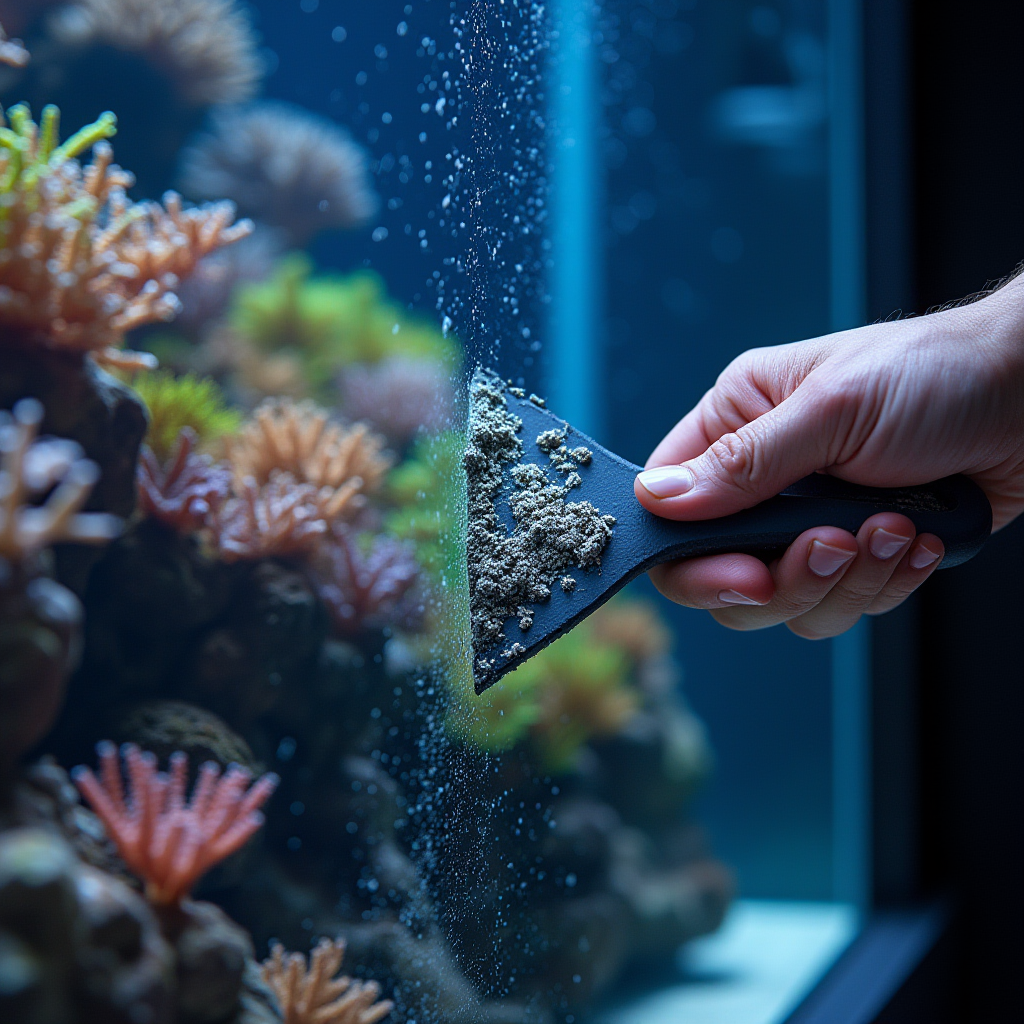
- Physical removal first, always. A dedicated algae scraper for the glass and manual removal for rockwork buys you time while you fix the underlying cause — chemical treatments alone rarely solve anything long-term.
- Nutrient export. Increase water change frequency temporarily, confirm your protein skimmer is actually dialed in (see Protein Skimmers Explained if you’re not running one), and check your test kit isn’t just telling you what you want to hear.
- Fix your flow map. Reposition powerheads to eliminate dead spots, especially low-flow corners near the sand bed.
- Add nutrient-competing life. Macroalgae in a refugium, along with grazers like certain snails and blennies, compete with nuisance algae for the same nutrients — but don’t rely on livestock alone to fix a nutrient problem you haven’t addressed at the source.
- Cut photoperiod, don’t cut it out entirely. Trimming an hour or two off your lighting schedule while nutrients settle is often enough; total blackouts stress coral more than they help.
Common Mistakes I’ve Made
- Treating every algae type the same way instead of identifying which one I actually had.
- Reaching for a chemical algaecide before fixing the nutrient source it was reacting to.
- Blaming the algae instead of testing what was actually feeding it.
- Removing coralline algae by mistake — it’s not the problem, it’s a sign of a healthy, stable tank.
- Expecting an overnight fix. Nutrient-driven algae takes about as long to clear as it took to build up.
Full Reef Algae Control Checklist
- Identified which of the Big Six you’re actually dealing with
- Tested nitrate and phosphate rather than guessing
- Confirmed flow reaches every corner of the tank, no dead spots
- Protein skimmer dialed in and producing skimmate regularly
- Photoperiod reasonable for your current nutrient level
- Physical removal happening consistently while the root cause is being fixed
Final Verdict
Nuisance algae isn’t bad luck — it’s your tank’s most visible way of telling you nutrients, flow, or lighting are out of balance. Identify which type you’re actually looking at, fix the cause rather than just the symptom, and expect the cleanup to take a few weeks once the underlying imbalance is corrected.
Want to get ahead of it before it starts? Read Reef Tank Water Parameters Explained to keep nutrients in the target range from the start, or use the Aquarium Wizard for a stocking and equipment plan sized to your tank.
Keep moving from reading to action.
Use the related guides to go deeper, check the shop if you need matching accessories, or join the email list for new guides and product updates.
Get new guides, product updates, and practical aquarium planning notes by email without waiting to check back manually.
Use the contact page if you want direct help instead of general email updates.
Related Guides
Aquarium Filter Types Explained
Compare sponge, hang-on-back, canister, internal, and undergravel filters so you can choose the right aquarium filtration system for your tank size, fish, budget, and maintenance style. Real lessons from tanks in Norman, Oklahoma.
Aquarium Lighting Guide
Learn how to choose the right aquarium lighting for your home or office tank — intensity, spectrum, duration, timers, planted vs fish-only setups, and algae control. Real lessons from tanks in Norman, Oklahoma.
Complete Beginner Tank Setup Guide 2026
Step-by-step instructions for setting up your first home or office aquarium — from choosing equipment and location to cycling, stocking, and long-term success. Real lessons from tanks in Norman, Oklahoma.