Step-by-Step Aquarium Setup Guide for Beginners
Many first aquariums go wrong for a simple reason: the owner buys the tank, adds everything quickly, fills it, and tries to turn it into a finished ecosystem in a single afternoon. That usually leads to missed steps, misplaced equipment, cloudy water, unstable water quality, and fish being added before the tank is ready.
The better approach is to set up the aquarium in the right order. When each step happens at the right time, the process becomes much less confusing and the tank becomes much more stable.
This guide walks through a practical step-by-step aquarium setup for home and small-office aquariums in the USA, with a focus on freshwater beginner systems that are realistic, safe, and easy to maintain.
Aquarium Setup Steps at a Glance
| Step | What You Do | Why It Matters |
|---|---|---|
| 1 | Choose the tank location and support | Prevents weight, sunlight, and maintenance-access problems |
| 2 | Clean and position the empty tank | Starts the setup safely without contamination |
| 3 | Add substrate and hardscape | Builds the tank layout before water makes changes messy |
| 4 | Install heater, filter, and other equipment | Makes sure everything fits and runs correctly |
| 5 | Fill the tank with conditioned water | Protects fish and beneficial bacteria from chlorine damage later |
| 6 | Start the system and test equipment | Confirms temperature, flow, and leaks before cycling |
| 7 | Cycle the tank completely | Makes the aquarium biologically safe for fish |
| 8 | Add fish slowly and stock conservatively | Protects stability during the first stocking phase |
Step 1: Choose the Tank Location First
Before opening equipment boxes or rinsing substrate, decide exactly where the tank will live.
Good placement rules
- use a level, weight-safe stand or furniture piece
- avoid direct sunlight
- leave room for cords, filter access, and water changes
- keep the tank away from heat vents and cold drafts
- make sure you can comfortably reach the tank for maintenance
Why this comes first
Aquariums become heavy fast. Once filled with water, substrate, and decor, moving them is a problem. It is much easier to correct the location before the tank is installed than after everything is running.
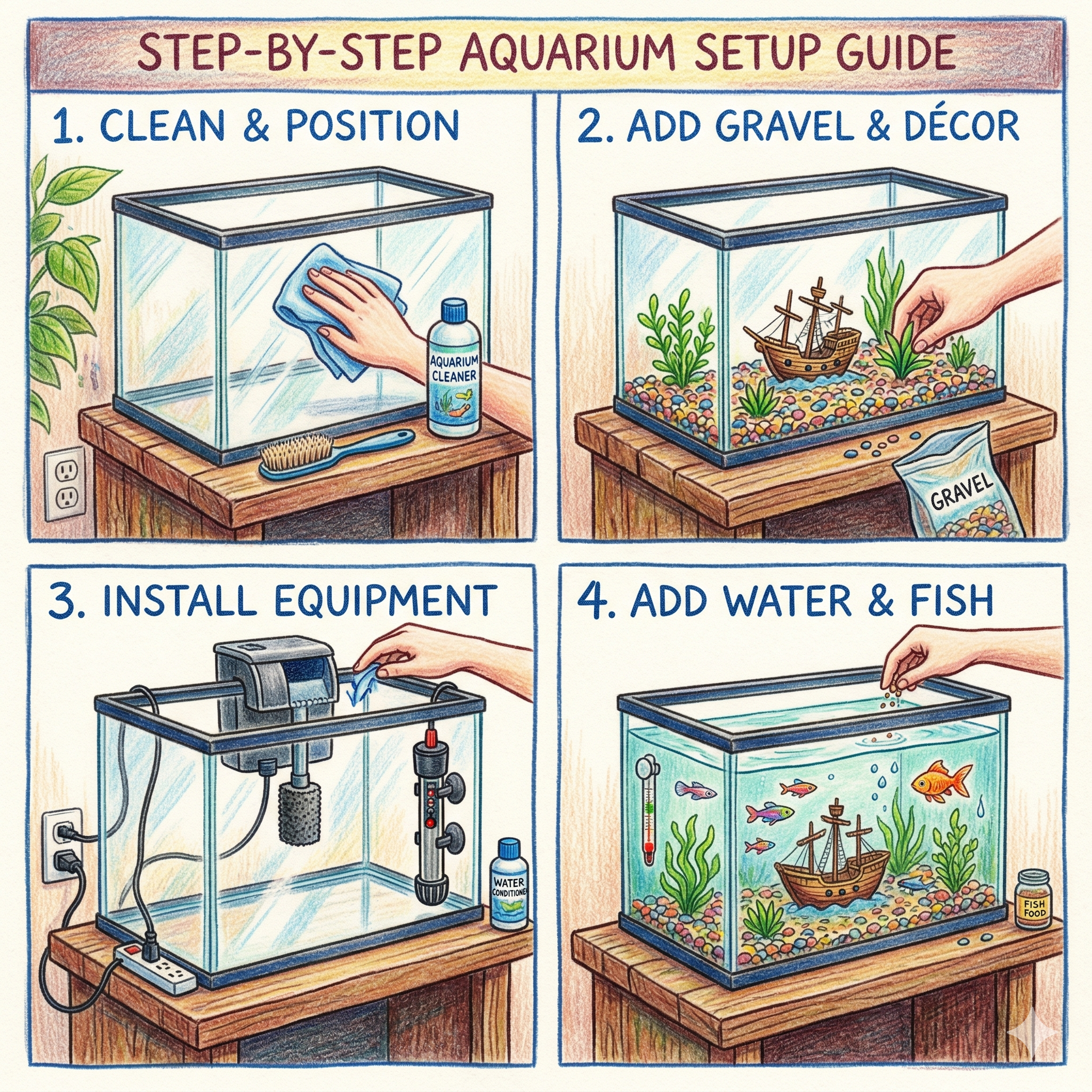
Step 2: Clean and Position the Empty Tank
Once the location is chosen, place the tank and verify that it sits flat and stable.
What to do
- inspect the tank for any cracks or shipping damage
- wipe the inside with clean water only
- do not use soap, glass cleaners, or household chemicals
- place the tank in its final position
- confirm the stand or furniture is stable and level
Important reminder
Even small amounts of household cleaner residue can be dangerous in an aquarium. Water and a clean cloth are enough for basic preparation.
Step 3: Add Substrate
Substrate should go in before the tank is filled.
Common beginner substrate choices
- natural gravel
- smooth small gravel
- beginner-friendly planted substrate in low-tech planted tanks
How to do it
- rinse the substrate if needed, depending on the product
- add it slowly to avoid stressing the glass
- slope it slightly from back to front if you want a cleaner display look
Why this step matters
Substrate affects appearance, plant choices, cleanup ease, and how debris shows up in the tank. It also becomes much harder to adjust once the aquarium is full.
Step 4: Place Rocks, Wood, and Decor
After substrate comes the hardscape.
What to place now
- rocks
- driftwood
- caves or shelters
- stable decor pieces
Best practices
- place heavier rocks securely before the tank is full
- avoid sharp decor for delicate fish
- leave enough open swimming space
- do not overcrowd the layout
For beginner tanks, simpler hardscape usually works better than trying to recreate a complex showroom aquascape on day one.
Step 5: Install the Equipment
This is the stage where the tank starts becoming a real system.
Typical beginner freshwater equipment
- filter
- heater for tropical fish
- thermometer
- light
- lid if applicable
- air pump or sponge filter if the setup uses one
What to watch for
- make sure the heater placement makes sense relative to water flow
- confirm the filter intake and output have room to operate
- keep cord routing neat and safe
- create drip loops below outlets for electrical safety
Why this step happens before a full fill
It is easier to reposition equipment while the tank is still empty or only partly filled.
Step 6: Add Water Carefully
Filling the tank too quickly can disturb the substrate, cloud the water, and shift the layout.
Better method
- place a plate, bowl, or bag on the substrate
- pour water slowly onto that surface
- fill gradually so the substrate stays in place
Use water conditioner
If you are using tap water, add a water conditioner that neutralizes chlorine and chloramine according to the product instructions.
That step matters because untreated tap water can harm fish and interfere with biological stability.
Step 7: Plant the Tank if You Are Using Live Plants
Plants can go in once the tank is partially or fully filled, depending on the layout and plant type.
Beginner-friendly live plant examples
- anubias
- java fern
- cryptocoryne
- amazon sword in suitable tanks
- vallisneria in the right setup
Tips
- do not bury rhizome plants incorrectly
- avoid stuffing the tank with plants you do not know how to maintain
- focus on durable, low-maintenance species first
Live plants can help a beginner tank, but they should not complicate the setup so much that the owner stops enjoying the process.
Step 8: Start the Filter, Heater, and Light
Once the tank is filled and arranged, turn the system on.
What to check immediately
- filter starts properly
- heater is fully submerged if required by the manufacturer
- no leaks around seals or equipment
- water flow is not too strong for the intended fish
- light works and is not excessive for the setup
Let the tank settle
Some cloudiness right after setup is normal, especially in new tanks with fresh substrate. That does not mean the aquarium is ready for fish yet.
Step 9: Test Temperature and Basic Operation
Give the tank time to stabilize.
Confirm
- temperature reaches the right range
- heater cycles normally
- filter continues running smoothly
- equipment noise is acceptable for the room
For many beginner tropical freshwater tanks, the target water temperature will fall roughly in the upper 70s Fahrenheit, but the correct range depends on the fish plan.
Step 10: Cycle the Aquarium Before Adding Fish
This is the most skipped step in the hobby and one of the most important.
What cycling means
Cycling is the process of establishing beneficial bacteria that convert:
- ammonia into nitrite
- nitrite into nitrate
Without that bacterial base, fish waste builds into toxic compounds very quickly.
What beginners need to remember
- a tank with running water is not automatically a safe tank
- clear water is not the same thing as cycled water
- adding fish too early is one of the fastest ways to ruin a first setup
Practical cycling approach
- use a test kit
- monitor ammonia, nitrite, and nitrate
- wait until the tank shows stable biological processing before fish are added
Step 11: Add Fish Slowly
Once the tank is truly cycled, add livestock conservatively.
Best beginner approach
- start with a modest first group
- avoid fully stocking the aquarium on day one
- choose fish that actually fit the tank size and plan
- acclimate them carefully
Why slow stocking works
Even in a cycled tank, the biological system adjusts to the actual fish load over time. Slow additions reduce the chance of sudden instability.
Step 12: Start a Simple Maintenance Routine Immediately
The tank is not “finished” once the fish go in. It is now moving into the long-term care phase.
Basic beginner routine
- feed lightly
- watch fish behavior daily
- test water as needed
- do regular water changes
- clean glass and tidy debris before it becomes a bigger problem
- maintain the filter correctly without over-cleaning it
Consistency beats intensity. A moderate routine done every week works better than occasional large resets.
Best Setup Path for Most Beginners
For most first-time aquarium owners, the safest route is:
- freshwater rather than saltwater
- 10 to 20 gallons rather than a tiny bowl
- simple filtration
- tropical community fish or a betta-centered plan
- conservative stocking
- steady weekly maintenance
That path gives the best combination of stability, manageable cost, and realistic daily care.
Common Setup Mistakes
- adding fish the same day the tank is filled
- skipping water conditioner
- buying too much decor and leaving no swimming room
- choosing a tank that is too small for the intended fish
- turning the light on for too many hours
- overfeeding during the first weeks
- assuming the filter cartridge should always be replaced immediately
- confusing “new tank” with “ready tank”
Setup Checklist Before Adding Fish
Use this simple checkpoint list:
- the tank is on a stable, level surface
- filter and heater are running correctly
- temperature is stable
- water has been conditioned
- the layout is secure
- the tank is cycled
- a stocking plan exists
- food, test kit, and maintenance tools are already on hand
If those boxes are checked, the setup is in much better shape than the average first aquarium.
Final Verdict
The best way to set up an aquarium is not fast. It is orderly. When you choose the location carefully, install equipment correctly, fill the tank slowly, cycle it fully, and stock it conservatively, the whole hobby becomes easier.
If you want the shortest version: set the tank up in the right order, do not rush fish into it, and let stability come before excitement. That is what turns a beginner setup into a successful aquarium.
Related Guides
Aquarium Filter Types Explained
Compare sponge, hang-on-back, canister, internal, and undergravel filters so you can choose the right aquarium filtration system for your tank size, fish, budget, and maintenance style.
Complete Beginner Tank Setup Guide 2026
A complete step-by-step beginner aquarium setup guide covering tank size, equipment, cycling, stocking, and the most common mistakes that ruin first tanks.
Betta Tank Basics for Beginners
Learn how to set up a calm, healthy betta aquarium with the right tank size, gentle filtration, warm water, feeding routine, and beginner-safe maintenance plan.