
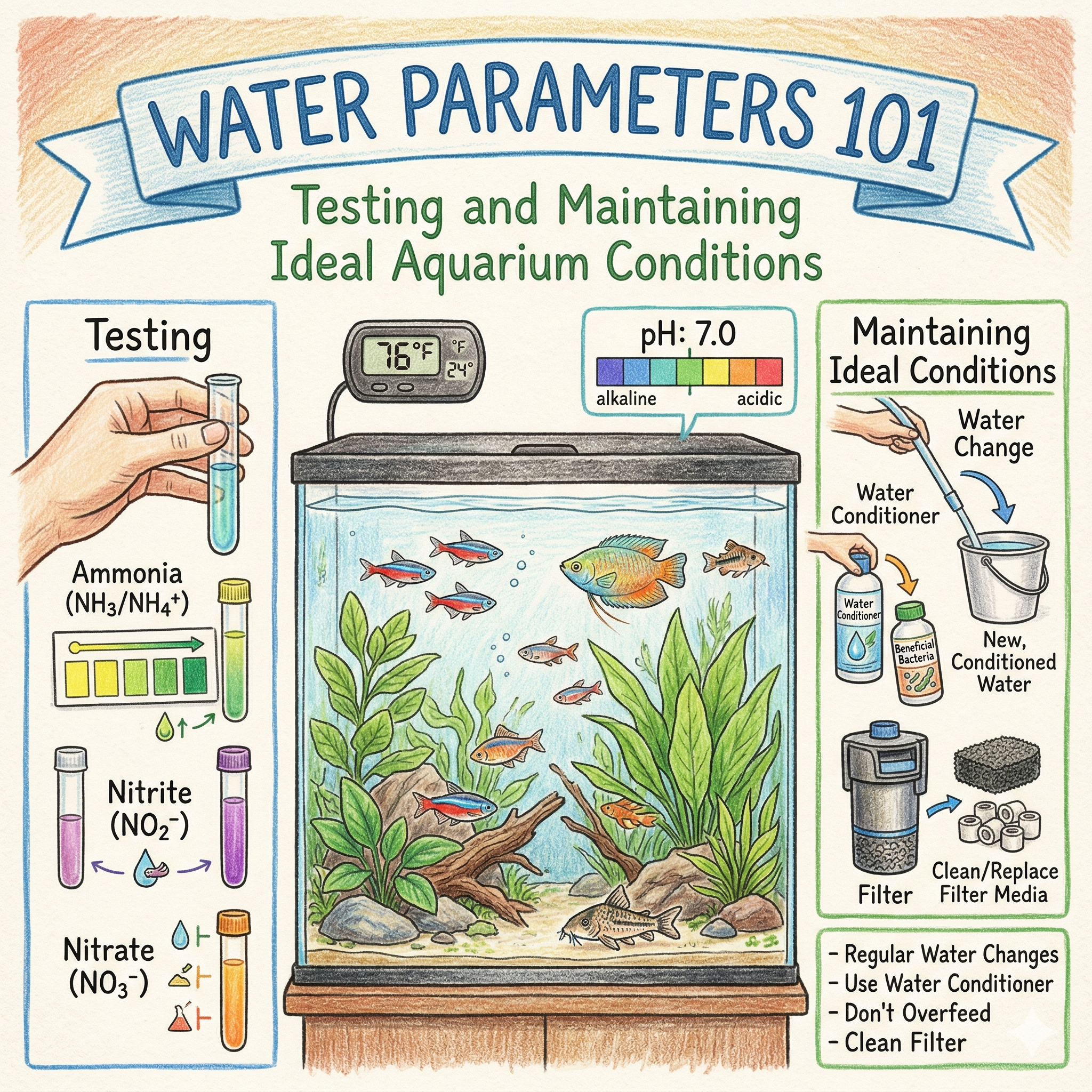
Water Parameters 101: Testing and Maintaining Ideal Conditions
Most aquarium problems do not begin with a dramatic crash. They begin quietly. A fish eats less. A betta starts resting more than usual. A school of tetras loses some color. Algae starts appearing more often. The water may still look clear, but something is off. In many cases, the real problem is not visible. It is happening in the water itself.
That is why water parameters matter so much. They tell you whether the tank is actually safe and stable, not just whether it looks clean. For beginners, testing water can seem technical or intimidating, but the core idea is simple: you need a way to measure what the fish are living in. Once you understand the most important parameters and how they behave, aquarium care becomes much easier to manage.
This guide explains the key aquarium water parameters, how to test them, what numbers matter most, and how to maintain stable conditions in a home or small-office aquarium.
Water Parameters at a Glance
| Parameter | Why It Matters | Beginner Priority | General Goal |
|---|---|---|---|
| Ammonia | Toxic fish waste byproduct | Critical | Keep at safe, non-detectable levels in a stable tank |
| Nitrite | Intermediate waste product, also toxic | Critical | Keep at safe, non-detectable levels in a stable tank |
| Nitrate | End product of the nitrogen cycle | High | Keep controlled with maintenance |
| pH | Measures acidity or alkalinity | High | Keep stable and appropriate for the livestock |
| Temperature | Affects metabolism, stress, and immunity | High | Keep stable and species-appropriate |
| GH (general hardness) | Measures dissolved calcium and magnesium | Medium | Match fish and plant needs |
| KH (carbonate hardness) | Helps buffer pH stability | Medium | Maintain enough stability for the tank style |
Why Water Parameters Matter More Than “Clear Water”
Clear water can still contain dangerous ammonia or nitrite. Fish do not care whether the tank looks polished from across the room if the chemistry is stressing them.
Water testing matters because it helps you:
- confirm that a new tank is cycled
- catch problems before fish show severe stress
- understand whether maintenance is keeping pace with the fish load
- avoid guessing with chemicals or random “fixes”
The point of testing is not to become obsessed with numbers. The point is to stop guessing.
The Water Parameters Every Beginner Should Know
1. Ammonia
Ammonia is one of the most dangerous substances in a freshwater or saltwater aquarium. It comes from:
- fish waste
- uneaten food
- decaying plant matter
- dead livestock or other organic material
Why it matters
Ammonia damages fish quickly, especially in a new or unstable tank. It is one of the main reasons uncycled tanks fail.
What beginners should remember
- a stable cycled tank should not show ongoing ammonia problems
- ammonia spikes usually signal overfeeding, overstocking, poor maintenance, or incomplete cycling
2. Nitrite
Nitrite is produced when beneficial bacteria begin converting ammonia. This is part of the nitrogen cycle, but nitrite is still harmful to fish.
Why it matters
Beginners sometimes relax when ammonia starts dropping, but nitrite can still be dangerous. A tank is not truly stable if nitrite remains a regular problem.
What beginners should remember
- nitrite is a cycle-stage signal, not a “safe enough” result
- a stable mature tank should not show persistent nitrite issues
3. Nitrate
Nitrate is the end result of the nitrogen cycle. It is much safer than ammonia and nitrite, but it still needs to be managed.
Why it matters
High nitrate usually means:
- maintenance is not keeping up
- the tank is overstocked
- the tank is overfed
- plant uptake is too weak to help balance the load
How it is controlled
- regular water changes
- controlled feeding
- sensible stocking
- plant growth in some tanks
Nitrate is not the same kind of emergency as ammonia, but it is still one of the most useful indicators of overall system balance.
4. pH
pH tells you how acidic or alkaline the water is. Different fish tolerate different ranges, but for most beginners, the bigger issue is stability rather than constantly trying to force one exact number.
Why it matters
Sudden pH swings stress fish. Chasing pH with bottled products often creates bigger problems than simply maintaining a stable tank and choosing livestock suited to the available water.
What beginners should remember
- stable pH is usually more important than “perfect” pH
- choose fish that fit your normal water when possible
- avoid correcting pH casually without understanding why it is shifting
5. Temperature
Temperature is one of the most overlooked water parameters because it feels less “chemical” than the others. It still matters every day.
Why it matters
Temperature affects:
- fish metabolism
- appetite
- immune response
- oxygen demand
- stress level
Tropical fish usually need steady heated water. A tank that drifts too cold overnight or fluctuates between seasons can weaken fish even if the rest of the chemistry looks fine.
6. GH: General Hardness
GH refers to dissolved minerals such as calcium and magnesium.
Why it matters
Hardness influences:
- fish comfort
- osmoregulation
- plant growth in some cases
- long-term suitability for certain species
Many beginner tanks can run well without fixating on GH daily, but it becomes more important when keeping fish with specific mineral preferences.
7. KH: Carbonate Hardness
KH helps buffer the water and resist sudden pH shifts.
Why it matters
Low KH can make pH less stable, especially in systems with heavier biological activity or certain aquascaping choices. For beginners, KH matters most as a clue about overall pH stability.
The Most Important Beginner Testing Routine
Not every tank needs the same testing schedule forever.
During cycling
Test more often for:
- ammonia
- nitrite
- nitrate
- pH if something seems unstable
In a stable established tank
Test regularly enough to confirm the tank is staying on track, especially:
- nitrate
- pH
- temperature
- ammonia and nitrite when fish behavior changes or something seems off
The less stable or more newly stocked the tank is, the more useful testing becomes.
Which Test Kit Should Beginners Use?
The best test kit is the one that gives clear, repeatable answers and actually gets used.
Useful beginner testing tools
- a freshwater test kit that covers ammonia, nitrite, nitrate, and pH
- a thermometer
- optional GH/KH testing when water hardness really matters for the livestock
For most beginner tanks, the core kit is enough to make better decisions.
How to Read Water Problems in Real Life
Scenario 1: Fish look stressed in a newer tank
Check:
- ammonia
- nitrite
- temperature
This often points to cycling or stocking problems.
Scenario 2: The tank looks fine but algae keeps returning
Check:
- nitrate
- lighting duration
- feeding habits
Water chemistry and maintenance often explain recurring algae better than “magic algae control” products.
Scenario 3: Fish are healthy but pH is not what a chart says it should be
Check:
- whether the pH is stable
- whether the fish are actually suited to your water
- whether you are overreacting to a number instead of the real condition of the tank
Stable water usually beats aggressively adjusted water.
How to Maintain Better Water Parameters
1. Do Regular Water Changes
This is still one of the most effective tools in aquarium care.
Water changes help:
- dilute nitrate
- remove dissolved waste
- reduce organic buildup
- support long-term stability
2. Feed Conservatively
Overfeeding is one of the fastest ways to worsen water quality in a small aquarium.
3. Avoid Overstocking
A tank with too many fish creates more waste than the system can comfortably process.
4. Maintain the Filter Properly
Filtration helps support biological stability, but only when it is not neglected or stripped of beneficial bacteria through aggressive media replacement.
5. Match Fish to the Water When Possible
If your natural tap water already fits the fish reasonably well, the tank is usually easier to maintain than if you constantly fight the water chemistry.
6. Keep Temperature Stable
A reliable heater and thermometer matter just as much as the chemical readings in many tropical tanks.
Common Beginner Water Parameter Mistakes
Chasing Perfect Numbers
Many new hobbyists try to force every reading into a narrow ideal. That often creates instability. Safe and consistent is usually better than aggressively corrected.
Ignoring Ammonia and Nitrite Because the Water Looks Clear
Clear water is not proof of safety.
Treating Nitrate Like It Does Not Matter
High nitrate may not crash the tank overnight, but it still signals that maintenance or stocking needs improvement.
Using Bottled Fixes Before Understanding the Cause
A test result is more useful than a random corrective product if you do not know what is actually wrong.
Testing Only After Fish Are Already in Trouble
Water testing is much more valuable when it confirms stability before the tank becomes visibly stressed.
Ideal Conditions vs Stable Conditions
This is one of the biggest mental shifts that helps beginners.
“Ideal” does not always mean a single universal number. It usually means:
- ammonia and nitrite are safely controlled
- nitrate is managed
- pH is stable
- temperature is appropriate
- hardness is compatible with the livestock
That is why “maintaining ideal conditions” is really about consistent husbandry, not constant correction.
Best Beginner Approach to Water Quality
If you want the simplest practical system:
- Use a good test kit
- Learn ammonia, nitrite, nitrate, pH, and temperature first
- Do regular water changes
- Feed lightly
- Stock conservatively
- Resist the urge to chase every number with additives
This approach works better than a shelf full of quick-fix bottles.
Final Verdict
Water parameters are the foundation of aquarium stability. If you understand ammonia, nitrite, nitrate, pH, temperature, and basic hardness, you understand most of what keeps a beginner aquarium safe. The key is not perfection. It is knowing what to test, testing often enough to catch real problems, and maintaining the tank in a way that supports steady conditions over time.
The healthiest aquariums are usually not the ones with the most intervention. They are the ones with the clearest routine and the most stable environment.
Read Next
- Read the nitrogen cycle guide if you want a deeper explanation of how ammonia, nitrite, and nitrate work together.
- Read the common algae problems guide if your water quality and light routine are feeding recurring nuisance growth.
- Read the beginner tank setup guide if you want to build a setup that makes stable water easier from day one.
Affiliate note: this guide is naturally suited for future affiliate placements around test kits, thermometers, heaters, filter accessories, and water-change tools, but the article should remain practical and measurement-first rather than sales-heavy.
PUBLIC_ADSENSE_GUIDE_INLINE_SLOT to enable this AdSense placement.
Keep moving from reading to action.
Use the related guides to go deeper, check the shop if you need matching accessories, or join the email list if you want future guides and product updates.
Get new guides, product updates, and practical aquarium planning notes by email without waiting to check back manually.
Use the contact page if you want direct help instead of general email updates.
Related Guides
Aquarium Filter Types Explained
Compare sponge, hang-on-back, canister, internal, and undergravel filters so you can choose the right aquarium filtration system for your tank size, fish, budget, and maintenance style.
Aquarium Lighting Guide
Learn how to choose aquarium lighting based on intensity, spectrum, timer control, plant needs, algae risk, and tank style so your setup looks good without becoming harder to maintain.
Complete Beginner Tank Setup Guide 2026
A complete step-by-step beginner aquarium setup guide covering tank size, equipment, cycling, stocking, and the most common mistakes that ruin first tanks.