
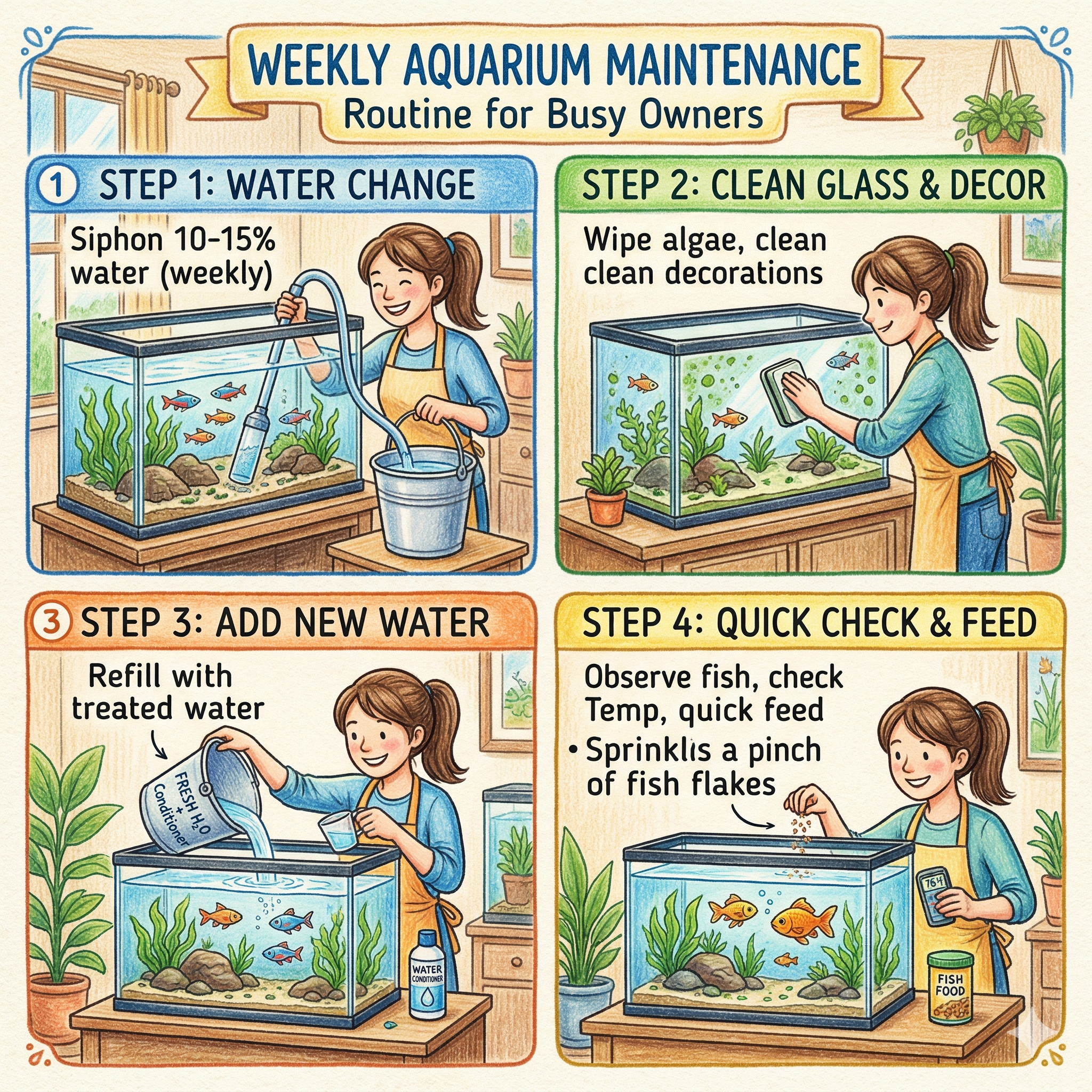
Weekly Aquarium Maintenance Routine for Busy Owners
Many people love the idea of a home aquarium until they imagine the upkeep. They picture constant scrubbing, endless water testing, and a long list of chores that never quite ends. In reality, most healthy beginner tanks do not need marathon cleaning sessions. They need a short, consistent routine that gets the important things done before problems build up.
That is why weekly maintenance works so well. A simple routine prevents small issues from becoming expensive or stressful ones. It keeps nitrate from creeping up, helps control algae, lets you catch fish-health problems early, and makes aquarium care feel manageable even during a busy week.
This guide breaks down a realistic weekly aquarium maintenance routine for home and small-office tanks, including what to do, how long it should take, what to check, and which mistakes to avoid.
Weekly Maintenance at a Glance
| Task | Why It Matters | Typical Time | Beginner Priority |
|---|---|---|---|
| Observe fish and equipment | Catches problems before they escalate | 2 to 3 minutes | Critical |
| Partial water change | Dilutes waste and refreshes water quality | 10 to 15 minutes | Critical |
| Light substrate cleaning | Removes trapped debris | 3 to 5 minutes | High |
| Wipe glass if needed | Improves viewing and slows algae buildup | 2 to 3 minutes | Medium |
| Top-level test check | Confirms the routine is working | 3 to 5 minutes | High |
| Quick feeding and stocking review | Prevents overfeeding and maintenance drift | 1 to 2 minutes | Medium |
For many beginner tanks, the whole weekly routine can stay in the 15 to 25 minute range once the process becomes familiar.
Why a Weekly Routine Works So Well
Aquariums usually decline gradually, not instantly. Nitrate creeps upward. Debris settles into the substrate. Algae gets a little thicker on the glass. Fish behavior changes slightly. If you only react when something looks obviously wrong, the tank has often been slipping for a while.
A weekly routine works because it:
- keeps maintenance predictable
- limits waste buildup
- reinforces stable water quality
- reduces the odds of sudden “rescue cleaning”
- helps you notice changes in fish, plants, and equipment
Busy owners usually do best with a fixed repeatable system, not an improvised one.
The Best Beginner Weekly Maintenance Routine
For most freshwater home aquariums, this is the best starting routine:
- Observe the tank before touching anything
- Turn off equipment if needed for the water change
- Remove a modest amount of water
- Vacuum loose debris from accessible substrate areas
- Wipe glass if algae is forming
- Refill with conditioned, temperature-appropriate water
- Restart equipment and confirm everything runs normally
- Feed lightly and do one last fish check
This routine is simple enough to sustain and strong enough to prevent many beginner problems.
Step 1: Observe Fish, Plants, and Equipment First
Before grabbing the siphon, spend a minute looking at the tank.
Check for:
- fish acting unusually quiet, clamped, or stressed
- torn fins, spots, flashing, or labored breathing
- cloudy water or unusual odor
- heater, filter, or air equipment not running correctly
- plants melting, rotting, or collecting excessive debris
This matters because maintenance is not only about cleaning. It is also your weekly inspection window.
Step 2: Do a Partial Water Change
For many beginner aquariums, a weekly partial change is the foundation of the routine.
Good beginner target
- change around 10 to 25 percent of the water each week
This is usually enough to:
- dilute nitrate
- refresh the tank without shocking it
- keep the tank on a predictable schedule
Small tanks often need stricter consistency because they change faster. Heavily stocked tanks may need slightly stronger maintenance. But weekly partial changes remain the best general baseline.
Step 3: Lightly Vacuum the Substrate
During the water change, use the siphon to remove loose waste from easy-access areas of the substrate.
The goal is not to strip the tank perfectly clean. The goal is to remove:
- fish waste
- uneaten food
- plant debris
- mulm collecting in open areas
Important beginner rule
Do not tear apart a planted aquascape or over-clean every inch of substrate weekly. Gentle, regular cleaning is better than aggressive disruption.
Step 4: Wipe the Glass and Clean Small Trouble Spots
If algae is forming on the glass, wipe it during the same session.
This step helps:
- keep the tank looking clean
- reduce algae from becoming harder to remove later
- improve your ability to observe fish clearly
You can also gently tidy obvious problem areas on decor, intake guards, or exposed surfaces, but keep it light and calm.
Step 5: Refill With Properly Prepared Water
Fresh water should be:
- conditioned if your source water requires it
- reasonably close to the tank temperature
- added back slowly enough to avoid disturbing fish or decor
This is where many beginners create stress accidentally. The water change itself is helpful, but poor refill technique can make it rougher than it needs to be.
Step 6: Restart Equipment and Check Flow
After refilling:
- make sure the filter restarts correctly
- confirm the heater is submerged and operating normally
- check that flow is appropriate
- verify no tubing or cords shifted during maintenance
This step matters because a successful water change can still turn into a problem if equipment is left off or restarted incorrectly.
Step 7: Feed Lightly and Watch the Tank Settle
Once the tank is back to normal, feed lightly if it is part of your normal schedule and observe the fish for another minute or two.
This gives you a quick confirmation that:
- fish are recovering calmly after maintenance
- nobody is gasping or hiding abnormally
- circulation looks normal
- the tank is back to a steady state
How Long Should Weekly Maintenance Take?
For a typical beginner aquarium:
- nano tank: around 10 to 15 minutes
- standard 10 to 20 gallon tank: around 15 to 25 minutes
- more complex or heavily stocked tank: a bit longer
If weekly care feels like a huge burden, the problem is often not the routine itself. It is usually one of these:
- the tank is overstocked
- the owner is over-cleaning
- the setup is harder than the owner’s schedule allows
The best routine is one you can actually keep doing.
What to Test Weekly
Not every stable tank needs a full chemistry deep-dive every single week, but weekly maintenance is a natural time to check the basics.
Good weekly or regular checkpoints include:
- nitrate
- temperature
- pH if stability has been a concern
- ammonia or nitrite if something seems off or the tank is newer
Testing during maintenance is easier than waiting until fish are visibly stressed.
Weekly Routine by Tank Type
Small Tanks Under 10 Gallons
These tanks often need disciplined weekly care because they have less water volume to absorb mistakes.
Best focus:
- never skip the water change
- feed lightly
- watch temperature and evaporation closely
Beginner Community Tanks
Most beginner community tanks do well with:
- weekly partial change
- light substrate cleaning
- quick glass wipe
- nitrate tracking
This is the classic maintenance sweet spot.
Betta Tanks
Betta tanks usually need:
- gentle flow awareness
- careful temperature stability
- consistent but not aggressive cleaning
Do not confuse “small tank” with “easy tank.” Many betta setups benefit from the same weekly discipline as larger community aquariums.
Cichlid or Higher-Waste Tanks
Messier or more aggressive stocking styles often need:
- stronger water-change discipline
- close observation of filtration performance
- faster response to debris buildup
Busy owners with heavier-waste tanks should be especially careful not to skip routine care.
The Best Tools for a Fast Weekly Routine
A short maintenance session gets easier when the tools are ready before you start.
Helpful basics include:
- a siphon or gravel vacuum
- a dedicated bucket
- water conditioner
- algae pad or magnetic cleaner
- thermometer
- test kit
- towel for quick spills
The right setup reduces friction, and lower friction makes consistency more realistic.
Common Weekly Maintenance Mistakes
Waiting Until the Tank Looks Bad
Good maintenance is preventative. If you wait for obvious grime, algae, or fish stress, the system has already drifted.
Doing Too Much at Once
Some beginners:
- deep-clean the substrate
- replace filter media
- scrub everything
- do a huge water change
all in one session. That often creates more instability than necessary.
Skipping Water Preparation
Replacement water still needs the right conditioner and a reasonable temperature match.
Overfeeding Right After Cleaning
Fresh clean-looking water sometimes makes owners feed more generously. That quickly works against the maintenance you just did.
Ignoring Equipment
A clogged intake, failing heater, or weak filter flow can turn a “clean tank” into an unstable one if not noticed early.
How to Keep the Routine Realistic
If you are busy, the best strategy is to make maintenance automatic instead of optional.
Helpful habits:
- do it on the same day each week
- keep supplies stored together
- use a short checklist
- avoid adding extra “deep cleaning” steps unless something actually needs them
Consistency usually matters more than intensity.
Sample 15-Minute Beginner Maintenance Flow
- Check fish and equipment for 2 minutes
- Siphon out 10 to 20 percent of the water while cleaning loose debris
- Wipe the front glass
- Refill with conditioned water
- Restart equipment and confirm flow
- Test one or two key parameters if needed
- Feed lightly and finish
That is enough to keep many beginner tanks in good shape week after week.
When Weekly Maintenance Is Not Enough
If the tank still struggles despite consistent weekly care, something else may be wrong.
Common causes include:
- overstocking
- overfeeding
- underpowered filtration
- excess light fueling algae
- poor fish compatibility causing stress
The answer is not always “clean harder.” Sometimes the system itself needs adjustment.
Final Verdict
The best weekly aquarium maintenance routine is not complicated. It is short, repeatable, and focused on the actions that actually protect water quality and fish health: observation, partial water changes, light debris removal, glass cleaning, and a calm reset of the system each week.
For busy owners, a realistic 15 to 25 minute weekly routine is usually enough to keep a beginner tank stable and attractive without turning the aquarium into a constant chore.
Read Next
- Read the water-change guide if you want a deeper breakdown of how much water to change and why.
- Read the water parameters guide if you want to know what to test during your routine and what the numbers mean.
- Read the algae guide if weekly maintenance is still not enough to control nuisance growth.
Affiliate note: this guide naturally supports future affiliate placements around siphons, buckets, algae pads, conditioners, towels, and test kits, but it should remain routine-first and beginner-practical rather than shopping-led.
PUBLIC_ADSENSE_GUIDE_INLINE_SLOT to enable this AdSense placement.
Keep moving from reading to action.
Use the related guides to go deeper, check the shop if you need matching accessories, or join the email list if you want future guides and product updates.
Get new guides, product updates, and practical aquarium planning notes by email without waiting to check back manually.
Use the contact page if you want direct help instead of general email updates.
Related Guides
Aquarium Filter Types Explained
Compare sponge, hang-on-back, canister, internal, and undergravel filters so you can choose the right aquarium filtration system for your tank size, fish, budget, and maintenance style.
Aquarium Lighting Guide
Learn how to choose aquarium lighting based on intensity, spectrum, timer control, plant needs, algae risk, and tank style so your setup looks good without becoming harder to maintain.
Complete Beginner Tank Setup Guide 2026
A complete step-by-step beginner aquarium setup guide covering tank size, equipment, cycling, stocking, and the most common mistakes that ruin first tanks.