Step-by-Step Aquarium Setup Guide for Beginners
Setting up your first aquarium the right way makes the difference between a relaxing hobby and a frustrating cycle of problems.
In my early tanks in Norman, Oklahoma, I made almost every common mistake: I set everything up in one afternoon, added fish the same day, and skipped proper cycling. The result was cloudy water, stressed fish, and repeated crashes. Once I learned to follow a deliberate order — location first, cycling before fish — my setups became stable and enjoyable.
This 2026-updated guide walks you through the exact sequence I now recommend for a reliable home or small-office freshwater aquarium.
Setup Steps at a Glance (2026)
| Step | What You Do | Why It Matters | Time Needed |
|---|---|---|---|
| 1 | Choose & prepare location | Prevents weight, access, and algae disasters | 1–2 days |
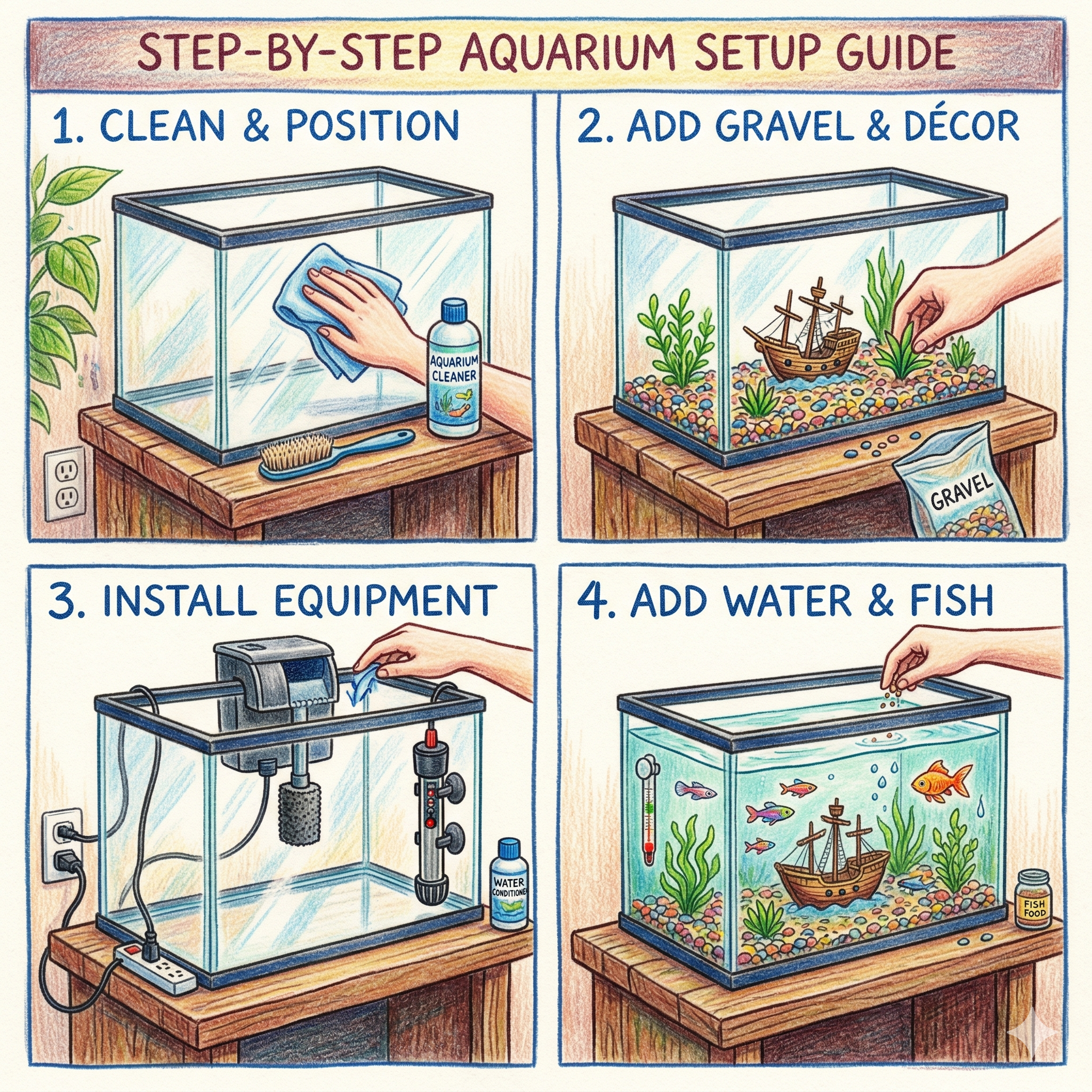
| 2 | Clean & position empty tank | Starts clean and stable | 30 min |
| 3 | Add substrate & hardscape | Easier before water is added | 45–90 min |
| 4 | Install equipment | Everything fits correctly | 30–60 min |
| 5 | Fill with conditioned water | Protects equipment & future fish | 20–40 min |
| 6 | Run & test system | Catches problems early | 1–2 hours + monitoring |
| 7 | Cycle the tank | Makes it biologically safe | 4–8 weeks |
| 8 | Add fish slowly | Protects stability | Ongoing |
Step 1: Choose the Right Location First
Decide before you buy or open anything.
Key rules I follow now:
- Sturdy, level surface rated for the full weight
- No direct sunlight (algae nightmare)
- Easy access for weekly water changes
- Away from heat vents, doors, and high-traffic areas
- Near power outlets with drip-loop safety
Step 2: Clean and Position the Empty Tank
- Inspect for cracks
- Wipe inside with clean water only (no soap!)
- Place in final position and confirm level
Step 3: Add Substrate and Hardscape
Do this dry — it’s much easier.
Beginner tips:
- Rinse gravel/sand thoroughly
- Slope higher in the back for depth
- Place heavy rocks securely
- Create hiding spots but leave swimming room
Step 4: Install Equipment
- Filter (position for good flow)
- Heater (fully submerged, near filter output)
- Light + timer
- Thermometer
- Create drip loops for safety
Step 5: Fill the Tank Carefully
- Place a plate or bag on substrate
- Fill slowly with dechlorinated water
- Add water conditioner immediately
Step 6: Start the System and Test Everything
Run for at least 24–48 hours and check:
- Temperature stability
- No leaks
- Proper flow
- No strange noises
Step 7: Cycle the Tank (Most Important Step)
Refer to my dedicated Nitrogen Cycle Explained guide.
Recommended: Fishless cycling with pure ammonia or fish food. Wait until ammonia and nitrite read 0 ppm consistently.
Step 8: Add Fish Slowly & Conservatively
Even after cycling:
- Start with 25–50% of final stocking
- Acclimate properly
- Observe for 1–2 weeks before adding more
Full Setup Checklist Before Adding Fish
- Tank on stable, level surface
- All equipment running 24/7 for weeks
- Water parameters stable (ammonia & nitrite = 0)
- Temperature steady in target range
- Stocking plan written down
- Maintenance tools and schedule ready
Common Setup Mistakes I’ve Made (So You Don’t)
- Rushing fish in on day 1–7
- Skipping water conditioner
- Placing tank in direct sun
- Overcrowding hardscape
- Not testing equipment before cycling
Putting It All Together
A successful first aquarium comes from order and patience, not speed. When you set up the tank in the right sequence — location, dry work, equipment, water, cycling, then fish — everything becomes easier and more stable long-term.
The tank isn’t “finished” when the fish go in. It’s just beginning. Consistent weekly care turns a good setup into a thriving ecosystem.
Ready to start?
Use the Aquarium Wizard for personalized recommendations.
Next, read my Choosing the Right Aquarium or Essential Aquarium Equipment.
Keep moving from reading to action.
Use the related guides to go deeper, check the shop if you need matching accessories, or join the email list for new guides and product updates.
Get new guides, product updates, and practical aquarium planning notes by email without waiting to check back manually.
Use the contact page if you want direct help instead of general email updates.
Related Guides
Aquarium Filter Types Explained
Compare sponge, hang-on-back, canister, internal, and undergravel filters so you can choose the right aquarium filtration system for your tank size, fish, budget, and maintenance style. Real lessons from tanks in Norman, Oklahoma.
Aquarium Lighting Guide
Learn how to choose the right aquarium lighting for your home or office tank — intensity, spectrum, duration, timers, planted vs fish-only setups, and algae control. Real lessons from tanks in Norman, Oklahoma.
Aquascaping Basics: Creating Stunning Underwater Landscapes
Learn practical beginner aquascaping rules for home and office tanks — focal points, negative space, hardscape, plant grouping, and layouts that look intentional instead of cluttered. Real lessons from tanks in Norman, Oklahoma.